• Skip to primary navigation
  • Skip to main content
  • Skip to primary sidebar

Shower Redefined

Redefine your Shower Experience

  • Home
  • Blog
  • Review
    • Cleaner
      • Glass Shower Door Cleaner
      • Shower Cleaner
      • Drain Cleaner
    • Shower Head
    • Toilet
  • Contact Us
  • About Us
  • Show Search
Hide Search

How to

How to Make Drain Cleaner

April 18, 2018 By Mark Benett

How to make drain cleanerDrains have a direct impact on the hygiene of your home. Besides water harvesting, they will assist to eliminate excess liquids and waste materials. In the process, some residues and scale from hard water are always deposited on your drains.  As a result, you should always clean the interior of your drains regularly.

Did you know that cleaning drains can help you reduce blockages, odors and cut on expenses? Many are always reluctant to clean drains because they don’t know how to make the drain cleaners.  Are you interested in knowing how to make drain cleaner?

Although there are many drain cleaners on the market, you might be interested to make one of your own.  You may be interested to make a small amount for your household or for large-scale industrial use. This is such a feasible idea with a lot of benefits that you should not shy away from.

There are three categories of drain cleaners. You can either settle on biological, chemical or mechanical drain cleaners. Your choice of what drain cleaner to make will depend on the manner you would like to use it.

Making Mechanical drain cleaners

These are drain cleaners that use the force of power and movements to clean drains. There are actually many mechanical drain cleaners that exist in stores ready for use. However, you might be curious to make one. How do you go about it? There are different types of mechanical drain cleaners that you could make.

You can decide to make a drainer that can push or pull using pressure like a plunger. In this case, you will need to make a tool with a large rubber sucker that is powerful enough to push or pull clogs. Nevertheless, any machine that can insert enough pressure into your drains would make a perfect choice.

You could also make drain cleaners that you will actually insert into your drains to clean it. Such drainers should be made with flappy rings around it. Consequently; they will be able to carry dirt from the drains out with it. This would be good for residues like hair in your drains. The top should be made sharp so that it is able to penetrate clogs. In addition, you should make a flexible drain cleaner that is able to get into any shape of drains.

If made properly, mechanical drain tools can make very good drain cleaners. However, they clean unevenly, are time-consuming and tedious to use.

Making Chemical drain cleaners

Chemical cleaners exist in either gel, powder or liquid forms.  These are probably the most powerful cleaners out there due to their fast acting nature. Some chemicals are corrosive and would destroy or weaken your drains. Nevertheless, some chemicals are reactive with each other thus would end up releasing fumes. Therefore, most chemicals will come in already manufactured form, ready for use. However, that should not make you shy away from making chemical drain cleaners. Furthermore, what if you intend to process shelved products?

Just as the name suggests, your cleaners can have a chemical reaction with the clogging substance. In the process, they will either take or give electrons to the clogging substance formulating it into a soluble waste. There are three main types of drain cleaners that you can make. You can either settle for oxidizing or an acid drain cleaner. In addition, you could as well go for a caustic drain cleaner. You should always aim at producing one of these drain cleaners.

Oxidizing drain cleaners are generally good with organic clog material on the drains. It should make the clog lose electrons and becomes oxidized. Moreover, it is heavier than water thus can flow through it to reach stains. They should be able to produce heat during the process thus weakening and removing clogs.

On the other hand, acid drain cleaners should be able to release hydroxonium ions that will react with dirt in the drains. In the process, heat is released that consequently melts clogs. However, they are very corrosive thus you should take much care when making such drain cleaners.

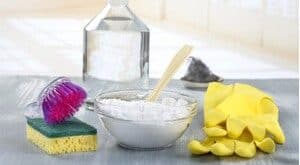
Last are the caustic drain cleaners. These are cleaners that contain bases such as caustic potash. They can give electrons to the clogging substance. Meanwhile, their hydroxide ions initiate a reaction that clears the clog. A typical example of this is the homemade drain cleaner that is made from baking soda and vinegar.

If used carefully and properly, chemical drain cleaners can work miracles to your drains. However, they are very dangerous to make thus should be handled carefully.

Making Biological drain cleaners

Are you interested in making eco-friendly drain cleaners? This should be a perfect pick for you. An example of such drain cleaners are enzymes and bacteria.

Do you feel interested in making enzymatic drain cleaners? If so, enzymes are fast acting and substrate specific. Therefore, you should know what dirt you aim to clean. However, they won’t work well for general drain cleaning. In addition, they do not reproduce and are difficult to manufacture.  Enzymes are also denatured in extreme temperature and pH.

Bacteria, on the other hand, offer a very good drain cleaning. Besides being stable in large pH range, they can survive extreme temperatures and oxygen levels. They can release different types of enzymes to digest any types of wastes. Most importantly, they are able to multiply and can be destroyed when the drains get clean.

To know more details you can check the below video

Final verdict

Making drain cleaners is not that hard. However, there are many drain cleaner out there already manufactured in the stores. You should, therefore, consider between making a drain cleaner and buying one.

In addition, making most of these drain cleaners is risky. You should consider safer homemade products using common home ingredients. Whatever the drainer you make, a good drain cleaner will always clean your drains with minimum side effects.
Filed Under: Blog, Cleaner, Drain Cleaner, How to

How Does Drain Cleaner Work

April 9, 2018 By Mark Benett

How Does Drain Cleaner WorkYou must be wondering what drain cleaners are, right? It’s simple. Drain cleaners are products used to unclog a blocked drainage system. It could be a toilet, a kitchen sink, a shower drain; any system that drains water. Drain cleaner could also be used to refer to the person that unblocks clogged drains. However, the most common name for the person is a Plumber.

There are different types of drain cleaners depending on the components used to make them but they all do the same job. I’ll highlight the different types and how does drain cleaner work.

 Types of Drain Cleaners & Their Working Process

#1: Chemical Drain Cleaners 

Chemical drain cleaners are quite popular. Chances are, every time you grab a drain cleaner from the local store it will be a chemical one. The chemicals form a reaction with the clogging material and generate heat which melts away the clog.

Chemical drain cleaners are further divided into categories. All these categories work the same way. The only difference is the process in which they work to unclog your drainage.

Drain cleaners with the chemical composition are heavier than water and thus the ability to move through the stagnant water. They either give or attract electrons from the waste creating the reaction that works the magic.

Even with all the praises on how well chemical drain cleaners clear your drainage, they also have a downside. They are highly toxic and can burn your clothes and skin. Due to the corrosive chemicals, these cleaners could wear out your pipes with continued usage.

#2: Enzymatic Drain Cleaners

Unlike the chemical drain cleaners, these cleaners don’t have any chemicals in them. Instead, they consist of enzymes and bacteria that feed on the organic matter that clogs up your sink. The typical kind of household blockage is caused by either hair or food particles. Enzymatic drain cleaners feed on these particles clearing the clog and maintaining the flow of water.

They are very environment-friendly and you can, therefore, use them without any worry of damaging your pipes. However, you’d have to work on that blockage when you have all the time in the world. It could take you a couple of hours just to unclog a simple kitchen sink.

#3: Mechanical Drain Cleaners

You could decide to do the unblocking manually without having to use all these chemicals. In such a case, you’re also covered. There are tools designed for just that. These are what we refer to as mechanical drain cleaners.

The tools include but not limited to:

  • Plungers

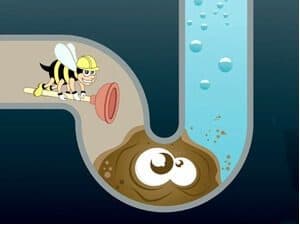
These ones are easy to use and very common in households. They have two parts: the handle that you use to squeeze into the blocked sink and the rubber part that sucks out the dirt by creating a vacuum. You can buy this one for a quick fix of your shower tab or sink.

  • Handheld drain augers

Just like the name suggests, you use your hand to rotate a kind of a drum that holds the cable you’ll insert in your sink. These ones clear a drainage that’s up to 8 meters from the opening.

  • Airburst drain Cleaners

It simply uses accelerated air to burst out the clog.

  • Plumber snakes

Another name for these tools is electric drain cleaners. They use an electric motor to straighten up flexible cables into pipes. This makes it possible to push all the dirt causing blockage and clean the walls of the pipes. It’s a very efficient way to clear any drainage without causing damages to the pipes.

  • Sewer Jetters

There is also this type of tool that uses water under very high pressure to unclog your sink.

Most of these tools, however, will require the expertise of a professional plumber to be able to handle and do the work efficiently.

#4: Homemade Drain Cleaners

I’m sure you experience clogging of sinks and toilets in your house from time to time and you end up stuck with a flooded sink waiting for the plumber. You don’t have to do anything anymore.

There are home remedies that one can use even without having to buy a drain cleaner.

The first one is mixing half a cup of vinegar with half a cup of baking soda and pouring the mixture on the blocked sink. Wait for 15 minutes and then pour hot water into the sink. Your clog will have cleared.

Another home magic trick is mixing salt, vinegar and baking soda in equal proportions and pouring the mixture in the clogged pipe. Wait for 15 minutes and open the hot water tap to run into the sink. The amount of the ingredients depends on the blockage size.

If all those don’t work for you or you just want a simple and easy method, you could try this one:- Pour hot water or a soapy solution into the blocked sink. It melts the grease or dissolves it.

All this can be done with items that are readily available at home, therefore, saving you the hassle of looking for a plumber or running to the supermarket every time you have a blockage.

Safety measures while using drain cleaners

  • Use in a place with good ventilation
  • Read the instructions on the product carefully
  • Keep away from children or any animals in the household
  • Do not mix different types of drain cleaners
  • Wear protective gear when using any of the drain cleaners
  • Wash your hands thoroughly after using drain cleaners to avoid contaminating other household items
  • Do not recycle the drain cleaner containers as they are highly toxic substances
  • Make sure you store them away from anything that could explode

To select the bet drain cleaner you can check out below video

Final Words

Drain cleaners come in handy in times of a blockage. Are you now able to make an informed decision on which kind of drain cleaner you need for what kind of blockage? I believe so.

However, it is advisable to get a plumber to check on your drainage system a few times in a year to confirm the state of the pipes and change them when necessary.

Pay close attention to the safety measures to ensure your drainage is clean and you’re safe. With that, you can now go buy and use any drain cleaner you think is suitable for your situation.

Filed Under: Blog, Cleaner, Drain Cleaner, How to

How to Flush Toilet Without Handle

April 1, 2018 By Mark Benett

How to Flush Toilet Without HandleThe toilet is something we are using on a daily basis. Did you ever go through the experience of a broken toilet? Ever wondered how to flush toilet without handle?

We use toilets without even thinking about it. When a problem occurs, it can be extremely annoying and useless.

Toilet without a handle is a common thing, no matter the reasons that lead to it. Although even it can see as a big problem by some people, it’s still fixable.

When most people find out that they can still flush a toilet without the handle, they become interested to learn the right way.

Anyone can flush a toilet without handle. There’s no skill necessary.

Is it Possible to Flush a Toilet Without Handle?

Breaking your toilet handle is a common thing, and it’s not your fault at all. It’s also not a fault of anyone from your family members.

It’s a problem that can occur for no specific reason. Something that is really surprising and no matter how good your toilet is, any brand can get broken.

The good news is that it’s still possible to flush a toilet without a handle. There are a few different ways you can do it actually. It’s up to you to test them out and see which one is the best and most suitable for you.

You don’t need to immediately replace a toilet that has handle missing, and you can still use it. Flushing your water no matter if you have toilet handle or not will save you from trouble. And that’s what counts the most.

Most people don’t believe it. Until someone actually shows them that it’s possible to flush a toilet without a handle. If you are one of them, this post will definitely help you and change your mind.

Why Would Someone Want to Flush a Toilet Without a Handle?

I understand. It might be weird to look for a solution for this problem. But, most likely there’s a solution for every problem that is out there.

It can sound silly. At least, there’s a solution that helps.

The reason is simple. Even though your toilet handle broke, you still want to flush your toilet like you usually would. If you can’t flush your toilet, you can’t use it that often either. Practically, it becomes impossible to use one toilet more than once if you can’t flush the toilet.

Flushing your toilet when the handle is broken is actually necessary. It’s a time when you wish you took your toilet for granted. Even although there are solutions out there, I bet you’d still want to fix it right away.

That’s how most people think. The toilet is something we take for granted. We actually appreciate it when something breaks. That’s totally normal.

Whatever the reason is, there’s no judging. Every new information learned is also a bonus.

How to Flush Toilet Without Handle

As I have mentioned above in this post, there are a few simple ways to flush your toilet without a handle.

First Way

If you are just looking for a quick fix until you get a new water tank in the store, the old traditional style will do the job. Get a bucket of water, precisely around a gallon of water, and simply pour it into the toilet bowl. Toilet bowl will dispose of human waste this way, just like it would if the water was flushed from the water tank. There is no difference at all.

Keep in mind that you should pour a gallon of water. If not, human waste won’t be disposed successfully.

Second Way

If you don’t plan to get a new water tank right away, that’s okay. You’re probably wondering if there’s a solution. Luckily, there is a solution, so don’t lose hope. The best option would be to open the cover of the water tank and have a look at the mechanism inside. You will see water that is ready to be flushed down the toilet.

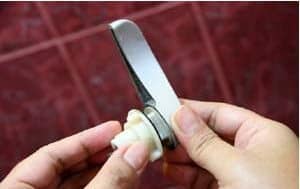
It’s possible to flush your toilet directly from the water tank without using the handle. Simply locate to what part is the handle attached. It’s most likely the part that’s sticking out of the water. That part is blocking the release valve when the handle is not pressed. However, when you press the handle, that part lifts up uncovering the release valve.

Simply use your hand to lift that part up slowly. You will release the water from the tank directly to your toilet bowl. There is no need to use a bucket of water either.

You can feel free to leave your water tank cover lifted off. That way, you can simply pull the mechanism to flush the water down your toilet.

You can also watch the below video for your knowledge

What to Do if Your Toilet Tank Don’t Have a Handle?

If you have bought a new toilet water tank and you get surprised that there’s no handle – stay still. Water tank styles depend on location you’re putting it on. Water tanks that are placed high above toilet have a flush string.

Instead, they require you to put a string which directly activates inside mechanism. If that’s the case, don’t get surprised, and don’t panic. That’s a normal thing for water tank that’s placed out of reach.

Conclusion

Toilet without a handle is a minor problem, but it can be a very annoying problem. You can be lucky that something else didn’t break instead of a simple handle.

When you find yourself in this situation, you should stay smart. There’s no need to buy a new water tank. You can easily fix existing one. Or at least find a solution that will help you for a while.

Breaking a toilet handle isn’t a big deal, and nobody should take a blame for it. It’s one-time experience you will laugh at later in your life.


Filed Under: Blog, How to, Toilet

How to Fix a Slow Flushing Toilet

March 25, 2018 By Mark Benett

How to Fix a Slow Flushing ToiletSlow flushing toilet isn’t fun. It’s one of the things that can get the worst out of people. Have you ever wondered how to fix a slow flushing toilet?
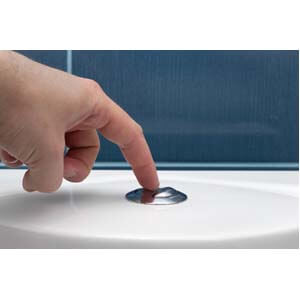
The toilet is something we use on a daily basis. But whenever it’s not performing good enough, it’s a problem that’s supposed to get solved.

You don’t need to have any experience in DIY. You will learn everything you need to know right in this post. With help here, you will easily be able to fix your slow flushing toilet.

You will also remove the possibility of slow flushing toilet again in the future. There is absolutely no need to call your local plumber and prolong the waiting time.

Why Slow Flushing Toilet Problem Occurs?

Slow flushing toilet is a common problem out there. You’re not the only one out there, so it’s nothing to sweat about.

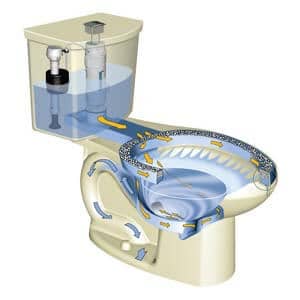
Whenever the crucial part of toilet gets blocked or messed up, problem occurs. Slow flushing toilet can mean two things. Either your water tank is flushing the water too slow for the bowl to dispose of human waste. Or it’s the toilet bowl that can’t flush the human waste quickly and efficiently.

Important Parts Are Blocked

The most common problem is that something is blocking the important parts.Such as jets under the toilet rim.

Water Tank Should Be Maintained

There’s one another problem. It’scan be the mechanism inside the toilet water tank.

Slow flushing toilet problem can occur due to bad maintenance. Did you know that you should clean your toilet at least once a week?

Whatever the reason is, it’s important to get the strength to do it yourself, and fix the problem once for all. You don’t need to be a plumber to fix minor toilet problems such as this one. Also, fixing this problem will save you money and time as well.

Is Slow Flushing Toilet Broken and Does it Need Immediate Replacement?

Slow flushing toilet doesn’t mean that your complete toilet is ready for replacement. At least not yet.

When most people face a problem, they immediately want to replace it and get over with it. But what if you are on a tight budget and every problem that occurs might break your bank?

Fixing the problem yourself is the smartest and the best option to do.

Not every slow flushing toilet needs immediate replacement. Most of them don’t even need a replacement at all.

Some of the slow flushing toilets might not need anything to be replaced. Some of them just need some part of the toilet replaced.

Whatever it is, it’s still going to save you more time and money. There’s no need to call the local plumber and buy a brand new toilet again.

Slow flushing toilet most of the time requires an easy fix solution. Solution will leave you laughing after you successfully fix it by yourself.

Especially nowadays in the age of the internet. How to fix a slow flushing toilet is a question that can be answered very quickly.

How to Fix a Slow Flushing Toilet?

Locate the problem

Before fixing a slow flushing toilet, it’s important to determine the exact problem. That isn’t hard as most people think it is.

Toilet has three main parts which are the water tank, mechanism, and toilet bowl.

Open the water tank

I would suggest you to start looking for the problem at the water tank. Lift the water tank cover-up and inspect the mechanism inside. Most of the time the flushing valve cover can get stuck. And water can’t be dropped to the toilet bowl at the speed it should drop. The solution for that would be to open the water tank and unclog the water releasing valve. It’s located at the bottom of water tank. Therefore, anything that’s found in water can get stuck in there.

Check the mechanism

Another possibility would be that the flushing valve mechanism. It isn’t working properly so it doesn’t lift up the valve cover as it should. To fix that, you should check and see whether floating arm is in a proper position. Make sure it pulls the releasing valve completely up. You can try and do it with your hand. It will give you an idea whether it’s the problem or not.

Those are the most common problems inside the water tank. They can easily be fixed using some of the techniques mentioned in this part of the article. Either by checking the release valve or floating arm. Mechanism should be checked thoroughly. However, if not – replacing the mechanism would be the next step. You don’t need to replace the entire water tank, just the mechanism.

Check the valve

If the water tank is working fine, the next step would be to remove the valve from water tank to the toilet bowl. Water flows there regularly, and the calcium is very common there. Too much calcium and it could block the valve which results in a slow flushing toilet. Easiest way to remove calcium block would be with proper cleaning chemical products made for toilets. Spray the product over the calcium block a few times. If you can, leave the chemicals sinking in the calcium block for a while. Calcium block will lose its integrity and come loose.

Check the toilet bowl

If the valve is fine, next step would be to look at the toilet bowl toilet bowl. Jets under the toilet rim are the place where the jams happen most of the time. Water flows there constantly so calcium can build up there as well. It might be a tough spot, however, using a mirror and some kind of wire will help you to clean the necessary spots. To remove jams, make sure you have removed all calcium blocks. Also, make sure that there’s nothing inside the water tank or toilet bowl blocking way of water.

Check toilet bowl valve

The last thing to check would be the toilet bowl valve. There might be a jam under the toilet bowl where the human waste gets disposed. Sliding a long flexible wire down the bowl drain is a good solution. It will immediately let you know if it goes in smoothly or something’s stuck in there. If it’s stuck – keep working with a flexible wire in both directions. That will shake the buildups and loosen them up. You will be then able to remove them easily.

Slow flushing toilet can be caused by many reasons, but most of the time it’s jam in either one of these places. Most of the time, there is no need for toilet replacement. The other time, either mechanism or water tank replacement would be fine.

In case you can’t find the problem that causes slow flushing toilet, you might have to give it another try. and repeat the steps.

To learn more check the video

Conclusion

With a little bit of luck, fixing the slow flushing toilet should be an easy task. It’s important to look for the problem, and once you find it, fixing it shouldn’t take long. However, it depends on the problem.

Hopefully, there won’t be any replacement necessary.

Once you fix the problem, make sure to maintain your toilet to prevent such problems in the future. Clean your toilet at least once a week. I would recommend you to do it at least two or three times per week.

That way calcium and other minerals from water can’t build up around the toilet. It’s easier to prevent the problem than to fix it.


Filed Under: Blog, How to, Toilet

How Do Dual Flush Toilets Work

March 18, 2018 By Mark Benett

how do dual flush toilet workDual flush toilets are widely used all around the world. It’s most likely that you have already seen one but you didn’t pay attention. But did you know how do dual flush toilets work in reality?
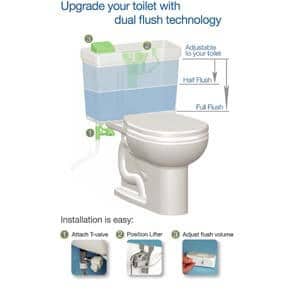
You will know once you use the dual flush toilet. Usually two buttons confuse people when they try to flush the toilet.

They’re very similar to the traditional toilets that we use on daily basis. However, they’re more efficient and useful. Especially in the locations around the world where there is lack of water.

We don’t think about such simple yet very useful things. We depend on our toilets, but what would happen if we didn’t have so much water to flush it even when it’s necessary?

What Are Dual Flush Toilets?

Dual flush toilets are very similar to traditional single toilets. However, they differ in one thing the most.

The difference between dual flush toilets and single flush toilets is simple. It’s the way they use water to dispose of human waste.

Dual flush toilets flush human waste differently. It depends if you’re flushing liquid or not. Dual flush toilets give the ability to the user to choose which way he would like to flush the toilet after the use.

They’re very useful in parts of the world where the water is in short supply. With dual flush toilets, you will be using less water to dispose of human liquid waste.

That way, not only you will save money on your water bill, but you will also save the water from over excessive use.

While there are many benefits of dual flush toilets, there are also some cons. Just like for any other product out there.

I am 100% sure that you have already seen a dual flush toilet, but you just haven’t recognized it back then. It might be confusing when you see it at first. However, once you know the use of it – everything becomes clear.

They can often be seen in hotels, which is a great way for the hotel to save water.

What’s The Difference Between Dual Flush Toilet and Traditional Toilet?

The difference between single and dual toilets is inside the water tank.

Transformation

You can easily transform any toilet from traditional toilet. Simply by replacing the water tank. Difference between dual flush and single flush toilets can be seen a little bit on the outside.How Do Dual Flush Toilets Work

Difference

Dual flush toilets are a little bit smaller in dimension and design. That means that they’re holding less water than single flush toilets.

The biggest difference is in the back of a toilet. Dual flush toilets have a large trap way and improved flushing system. It easily cleans all human waste down the drain easily.

Another difference can be seen in the water consumption, especially at the end of a month. Water price can be drastically reduced. Getting a dual flush toilet will help you save water and money.

There is also a difference in the way they flush the human waste down the drain as well.

How Do Dual Flush Toilets Work?

Traditional toilets use tube as a way of removing waste from the toilet bowl. Dual flush toilets use the different technique.

Traditional toilets work on the simple principle. When there is a lot of water in the toilet bowl, tube activates and disposes of waste. Therefore, a large volume of water is necessary so the human waste is pulled down the toilet bowl tube.

Technique

On the other hand, dual flush toilets use a different technique. They have a larger hole at the bottom of the tube which is located in the toilet bowl. There’s one another unique thing about dual flush toilets. It is their way of pulling the waste down the toilet bowl as well. They have removed tube action, so, therefore, there is no need for a large volume of water.

Water saving

Dual flush toilets use less water per each flush. They also let users of the toilet choose between two flush modes. They save water three times more than single flush toilets. Approximately, 68% of water can be saved by using dual flush toilets.

Money Saving

That definitely makes a significant difference on your water bill.

How It Works

Since there is a larger hole at the bottom of the toilet bowl. There is no tube action so toilet gets less clogged with dual flush toilets. By using the dual flush toilet, you will forget about your plunge. Also, you will forget about increasing the toilet flush power as well.

However, the only thing you will use more than plunger is the toilet brush. Water won’t be able to dispose of human waste if there’s no enough water.

Installation of the dual flush toilet isn’t different or harder than a single flush toilet. But the results are rewarding.

Will Dual Flush Toilets Be Used All Around The World?

Dual flush toilets are more common than pressure assist toilets. They are used all around the world. It’s most likely that you have already come across one dual flush toilet.

They can often be seen in hotels where dual flush toilets are made to save up to 60% water than single flush toilets.

However, dual flush toilets are a little bit more expensive than single flush toilets. In my opinion, they’re totally worth it. Even although they’re expensive, you will be able to save more money. Especially on your water bill. It also do good for the environment and the world.

Conclusion

I hope that you have found everything you were looking for this post.

Dual flush toilets are still simple, yet improved version of single flush toilets.

They won’t only help you save water and money, but they will also help to prevent your toilet from clogging. However, that doesn’t mean you should flush everything down the drain.

What do you think about dual flush toilets? Did you come across any yet? Will you embrace them in the future?

Filed Under: Blog, How to, Toilet

« Previous Page
Next Page »

Primary Sidebar

16 Boho Farmhouse Living Room for Eclectic Comfort

November 19, 2025

16 Boho Farmhouse Bedroom for Cozy Retreats

November 19, 2025

17 Low Maintenance Bathroom for Functional Style

November 19, 2025

19 Fall Tray Decor Ideas for Stylish Displays

November 19, 2025

18 Organic Modern Bathroom for Natural Comfort

November 19, 2025

Forget flushing the toilet without handle, if you ever consider buying new toilet, please consider buying this amazing toilet

[amazon box="B001U6EFKE"]