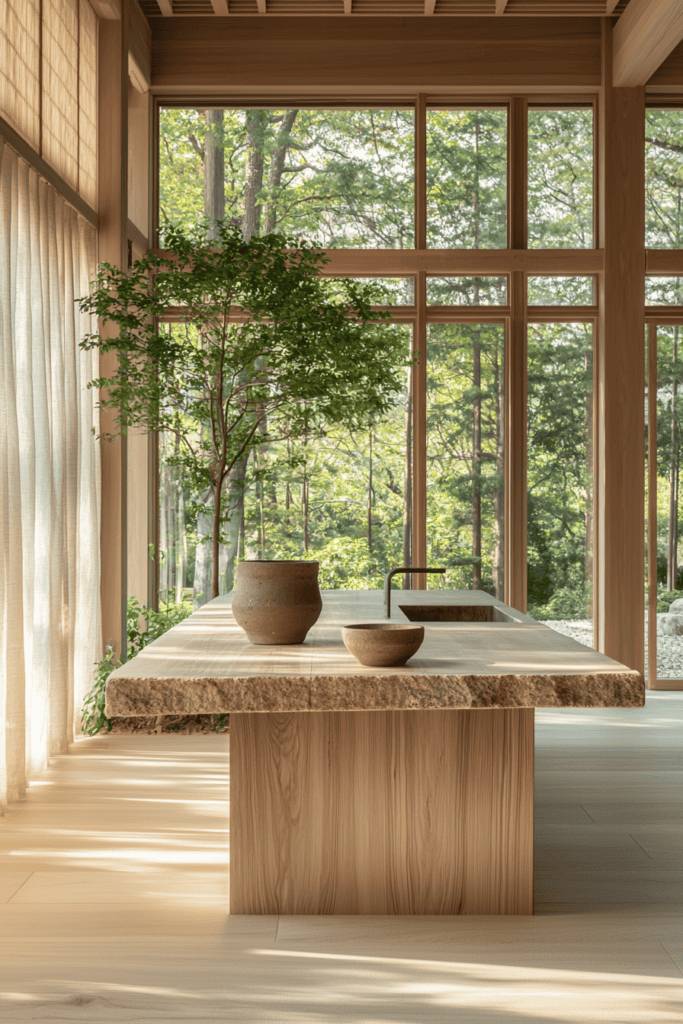
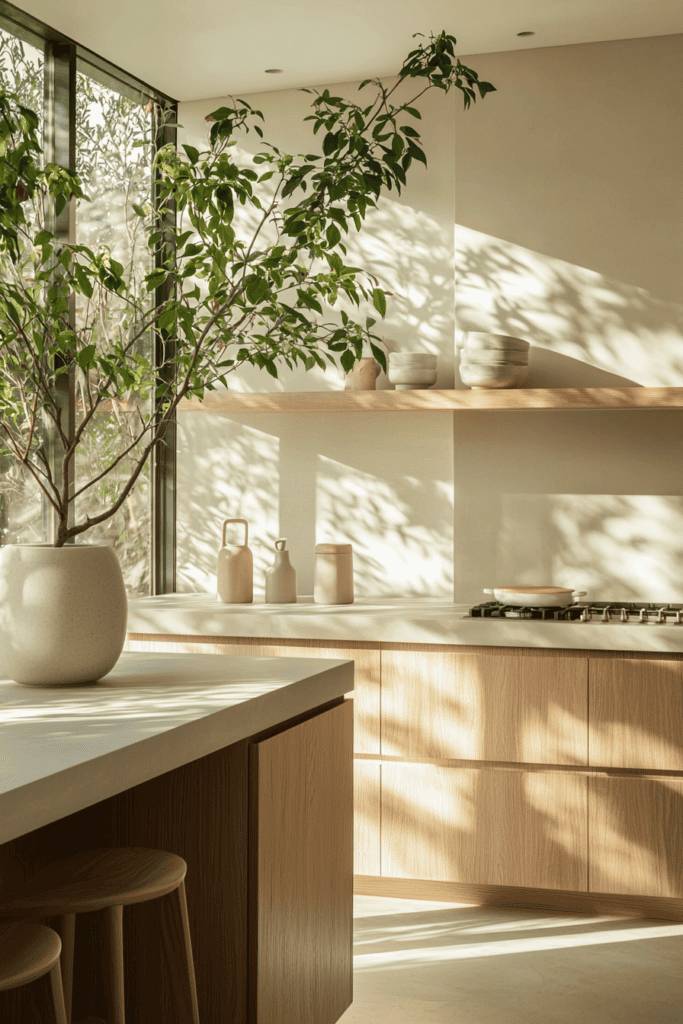
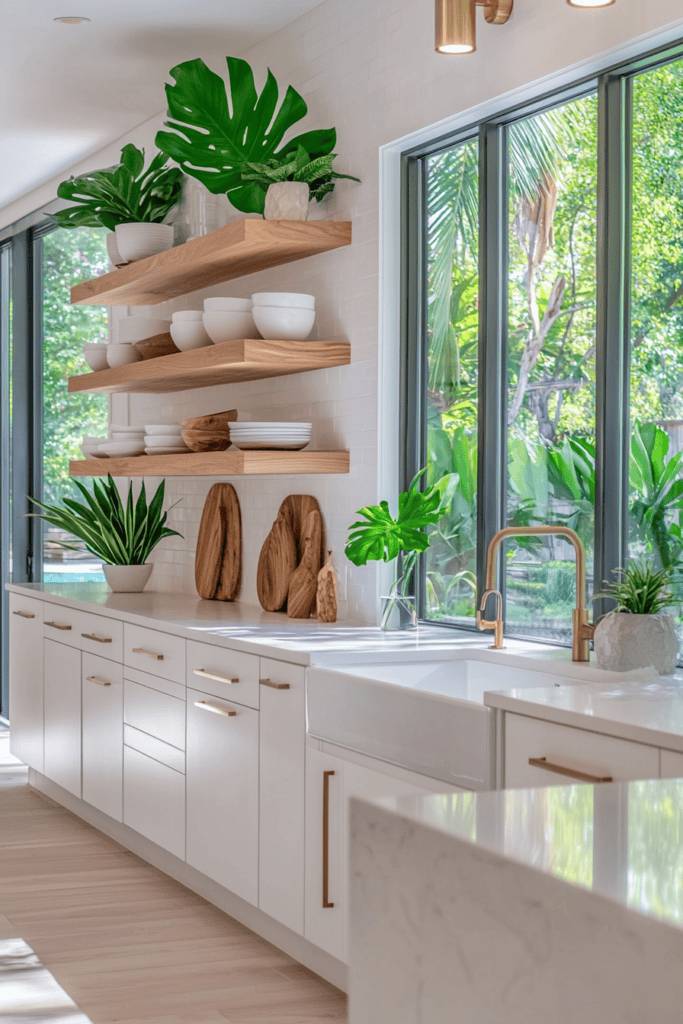
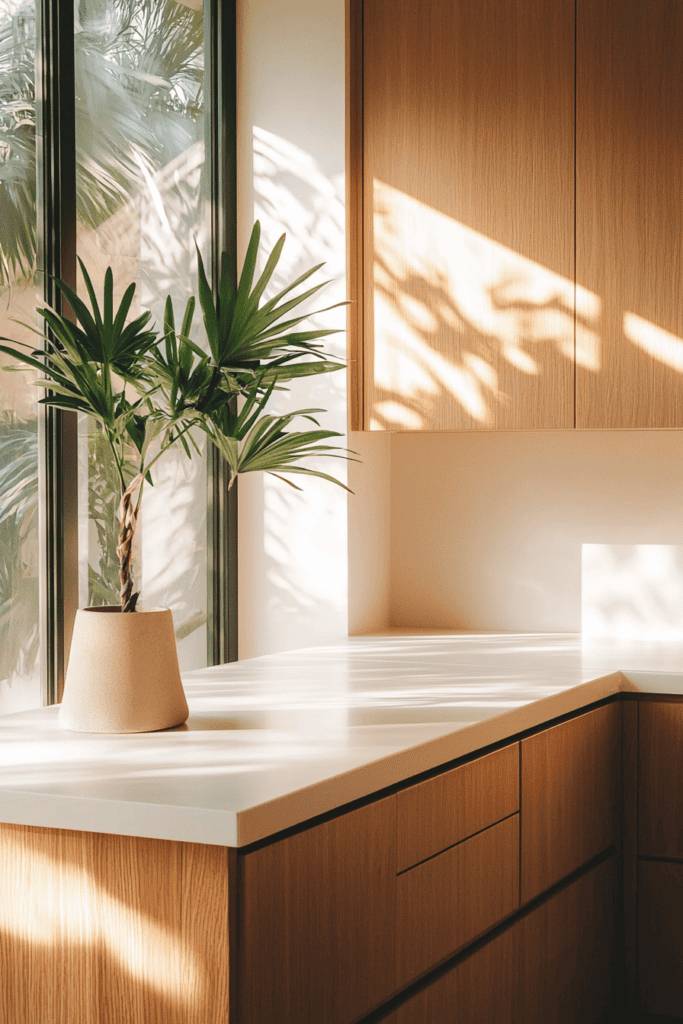
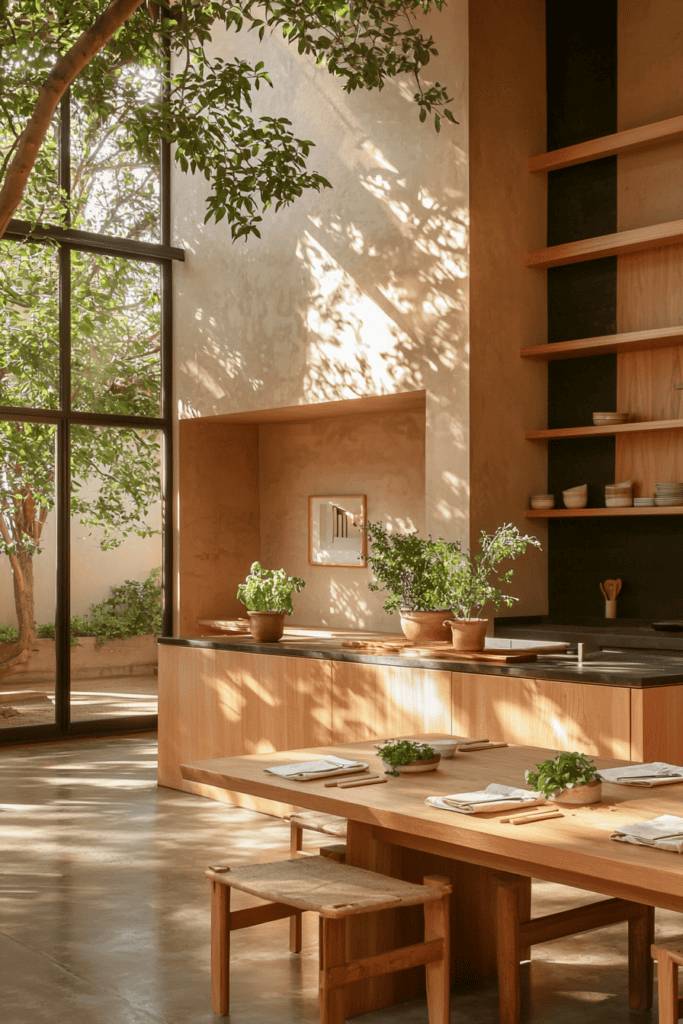
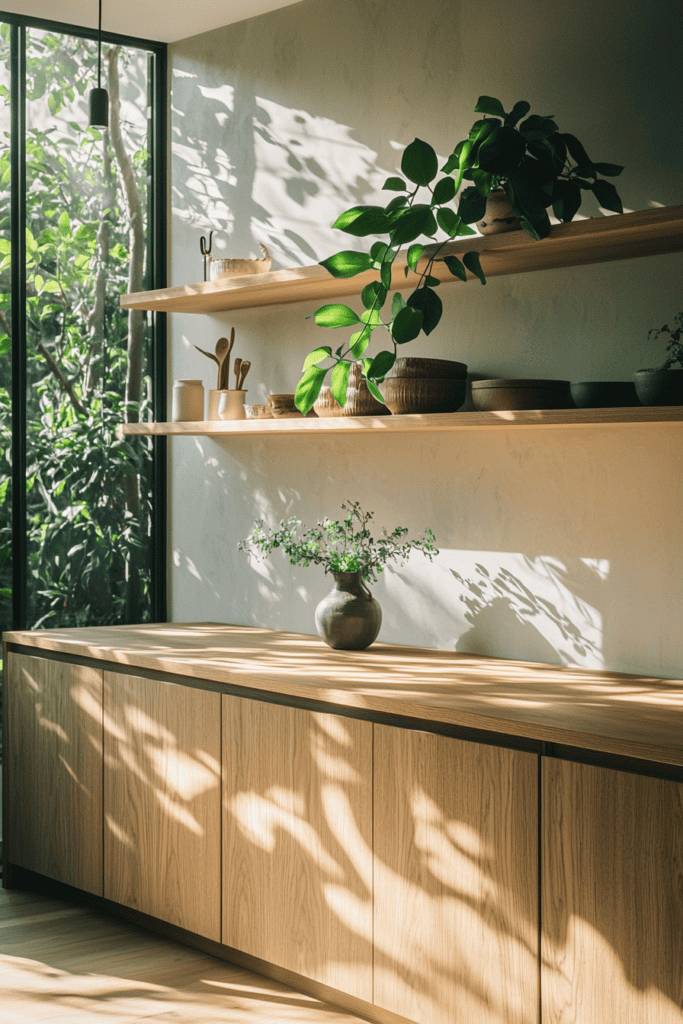
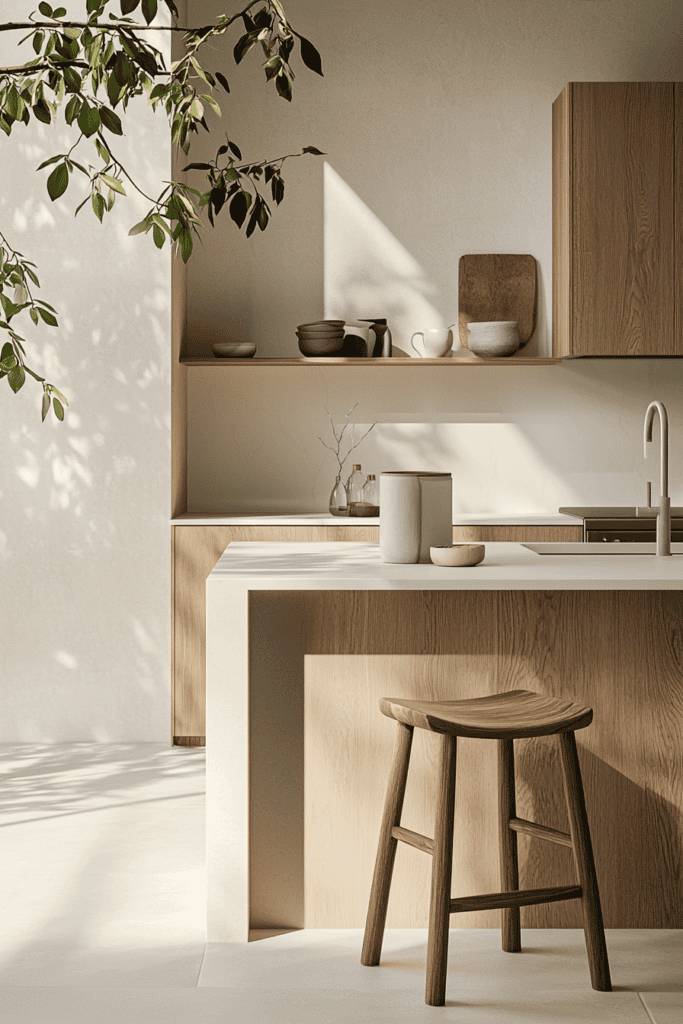
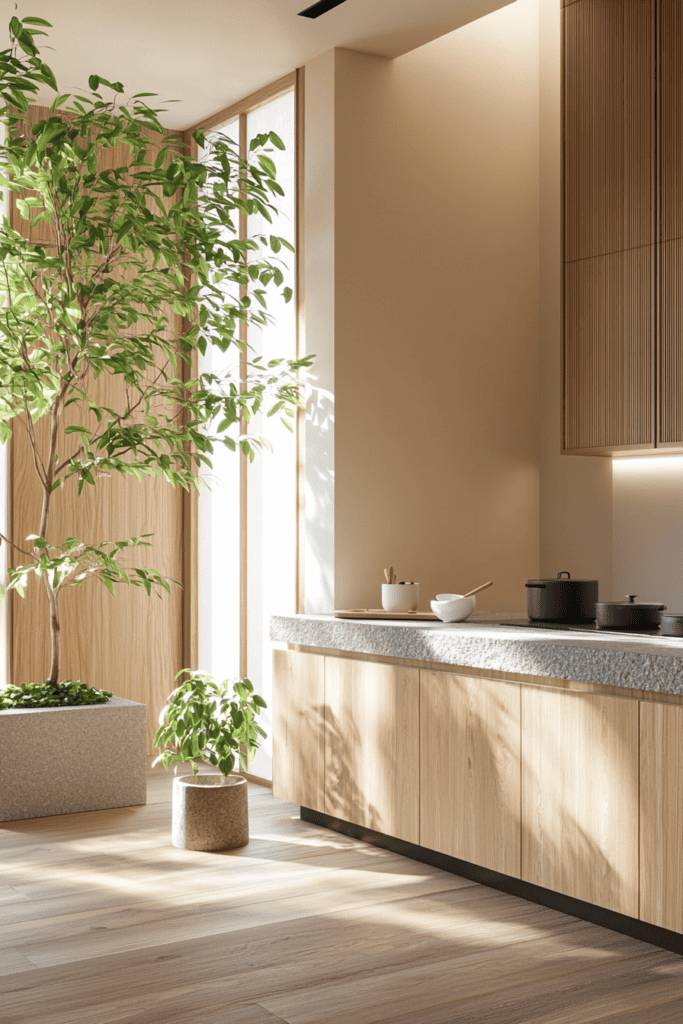
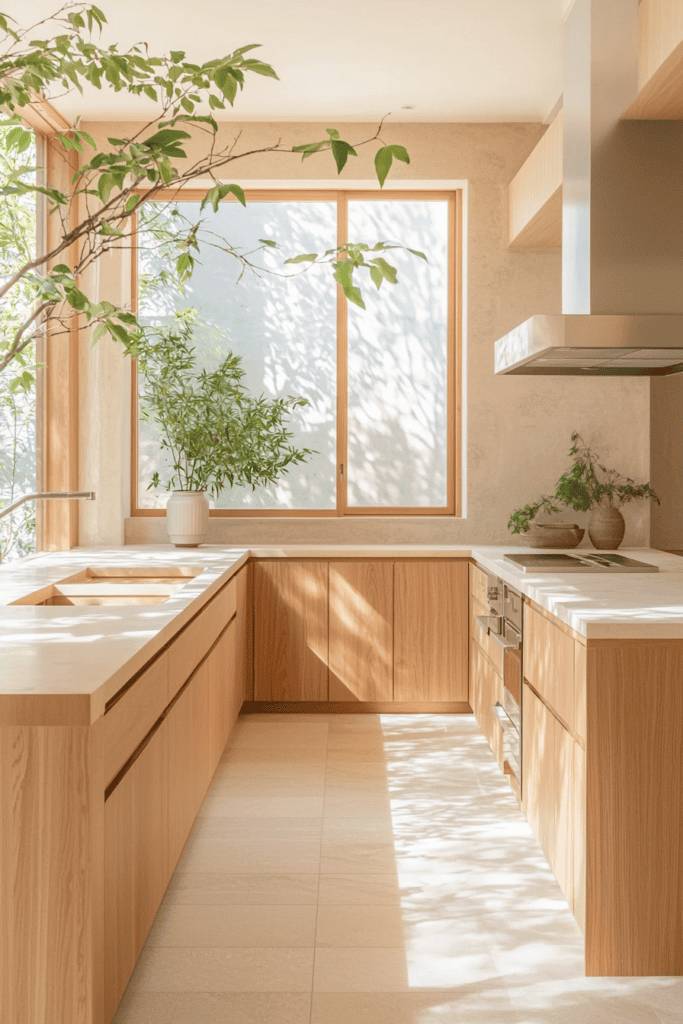
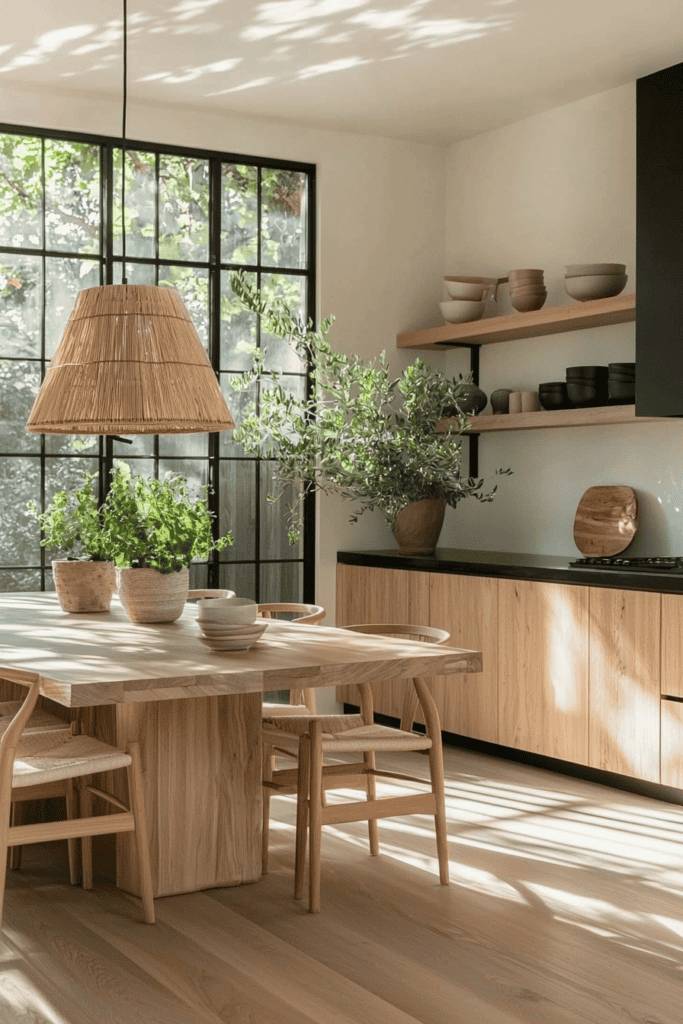
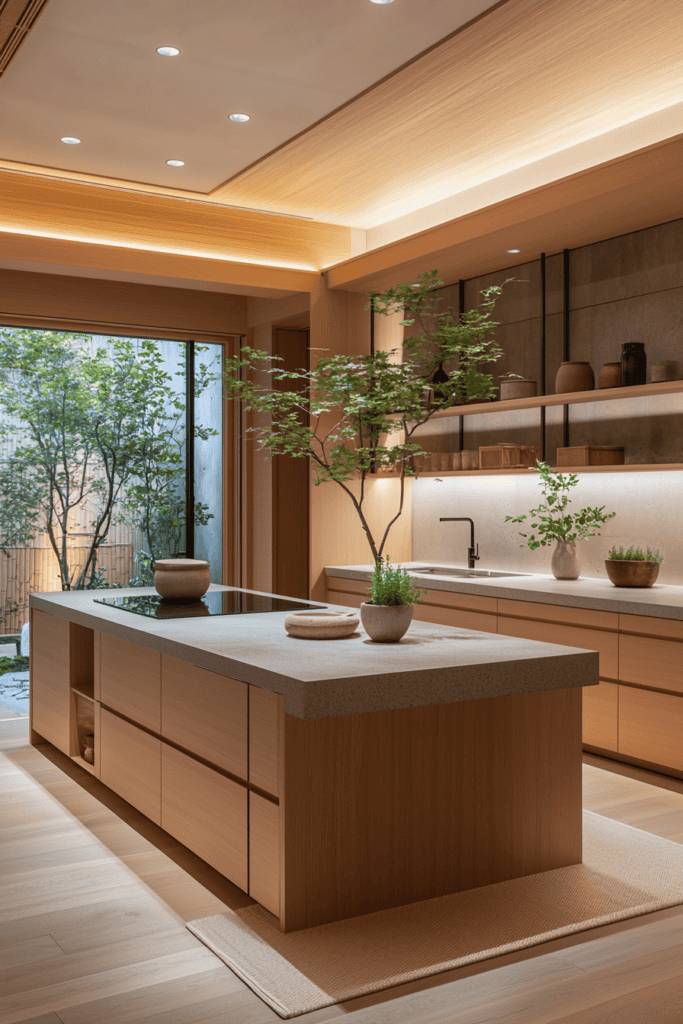
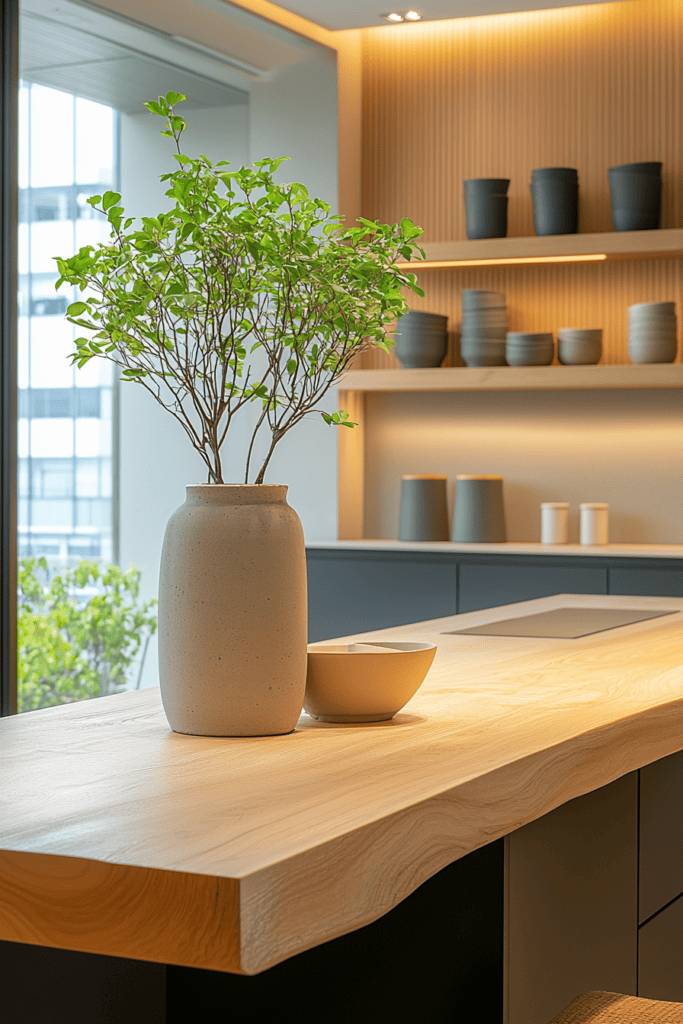
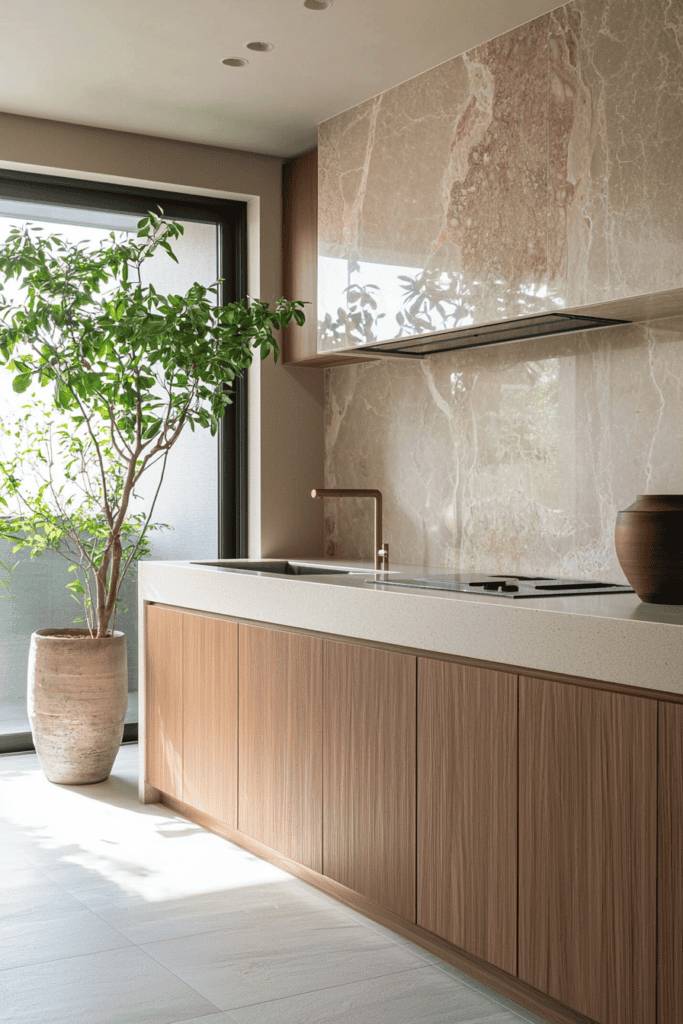
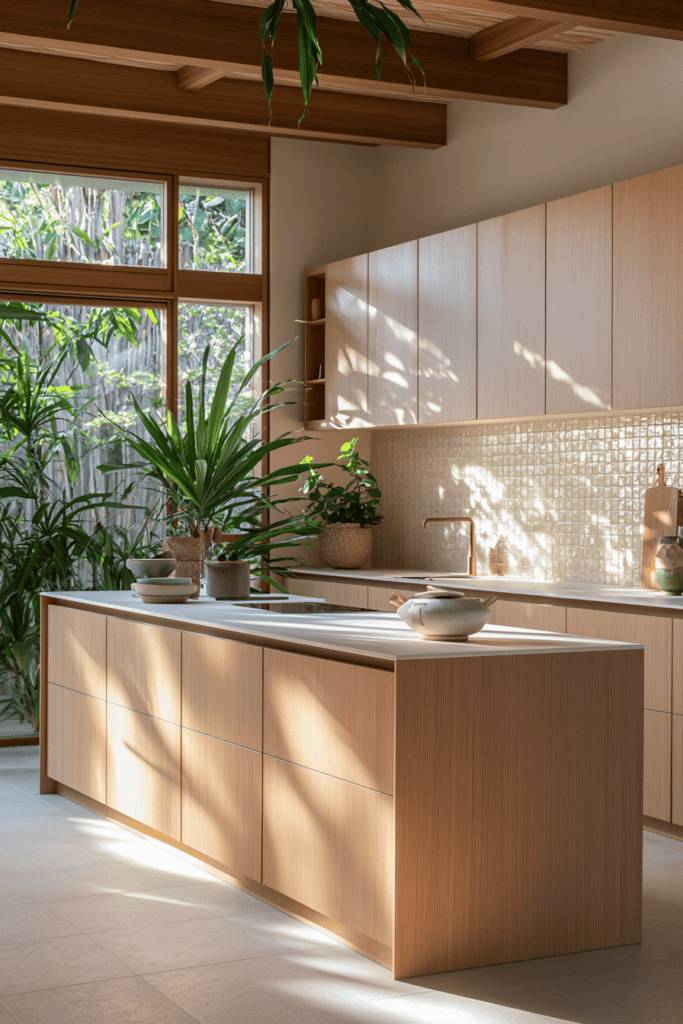
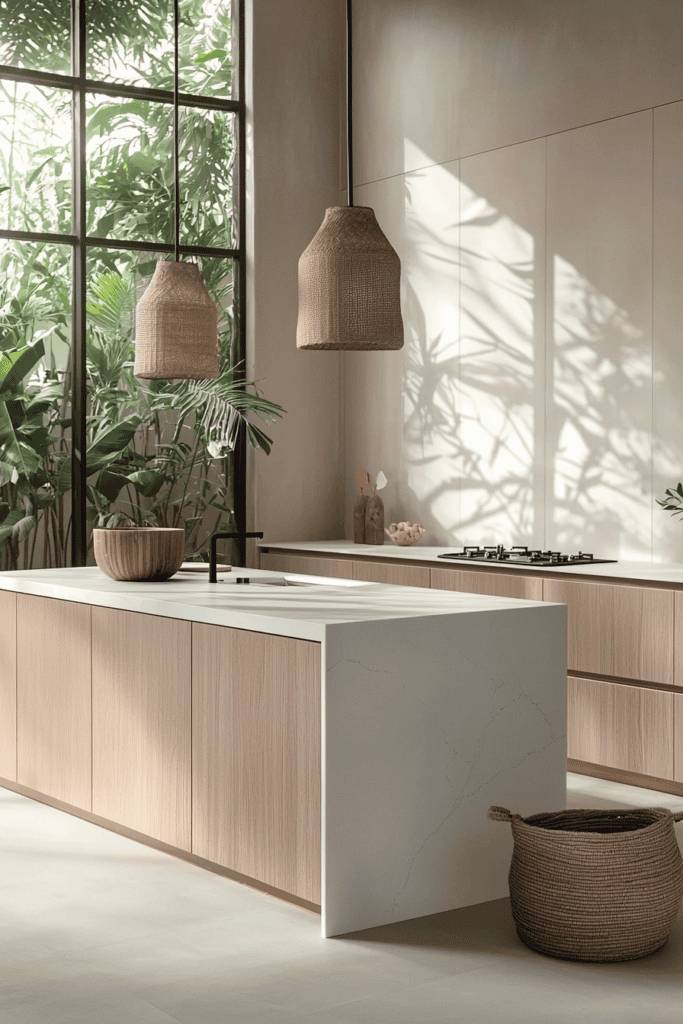
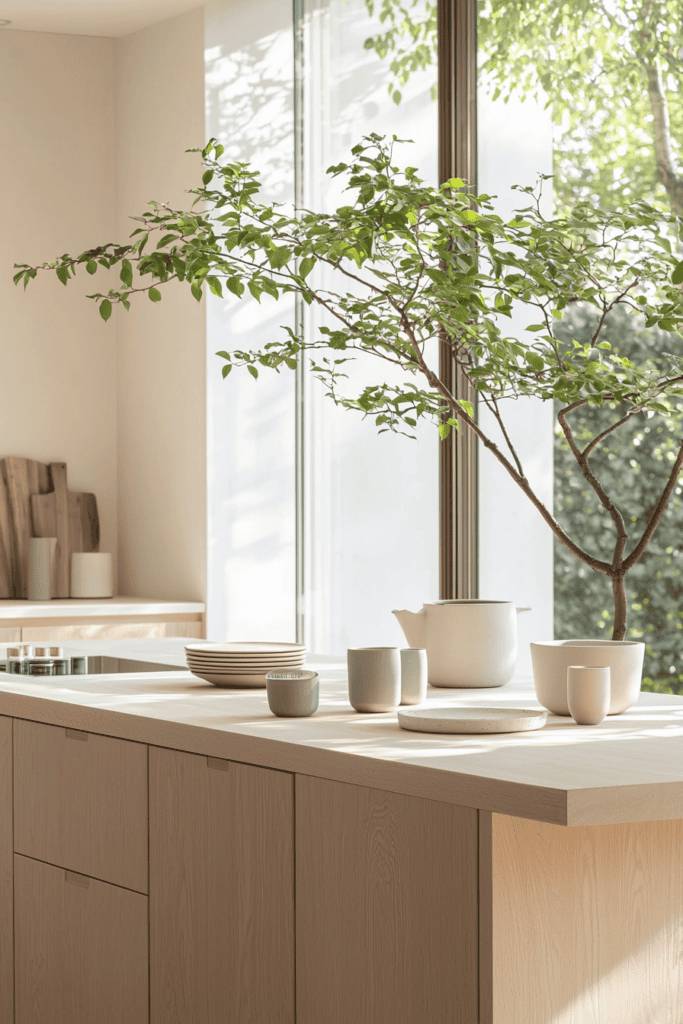
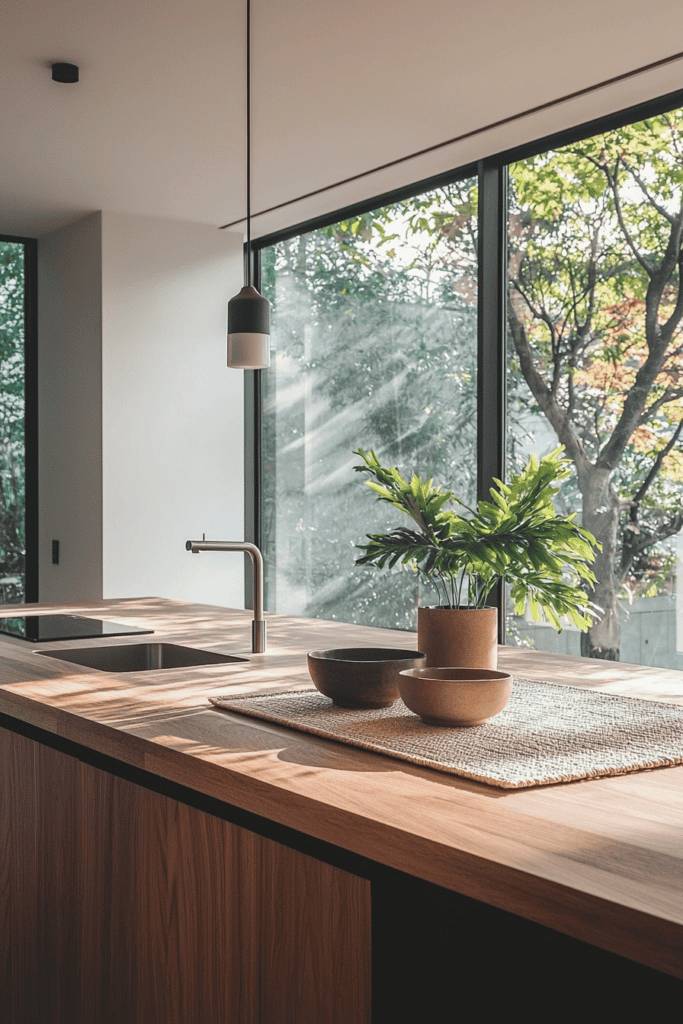
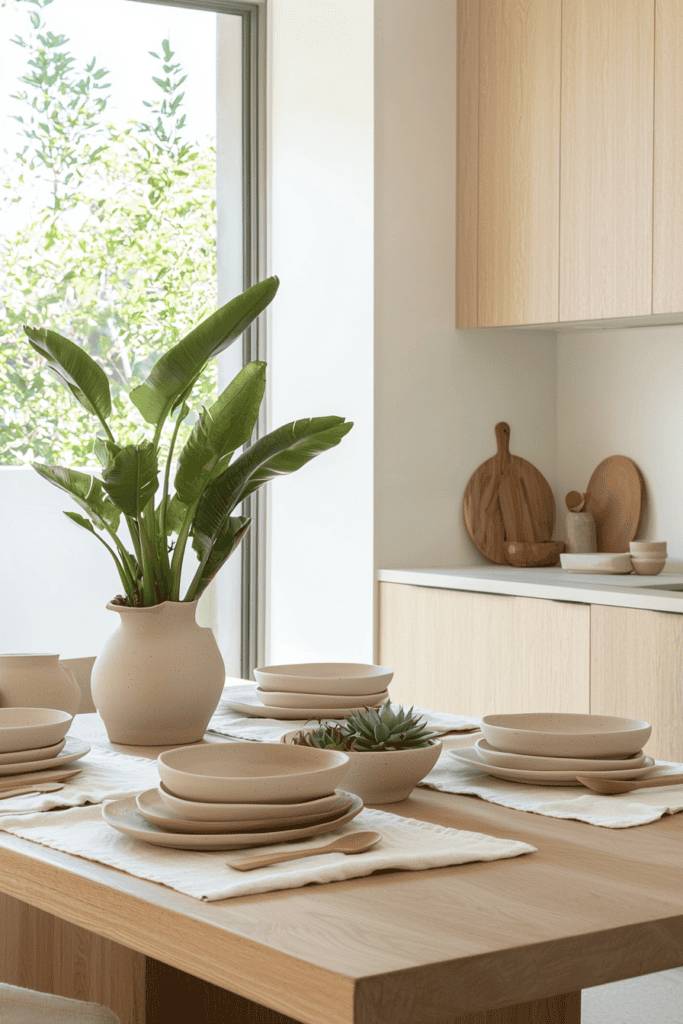
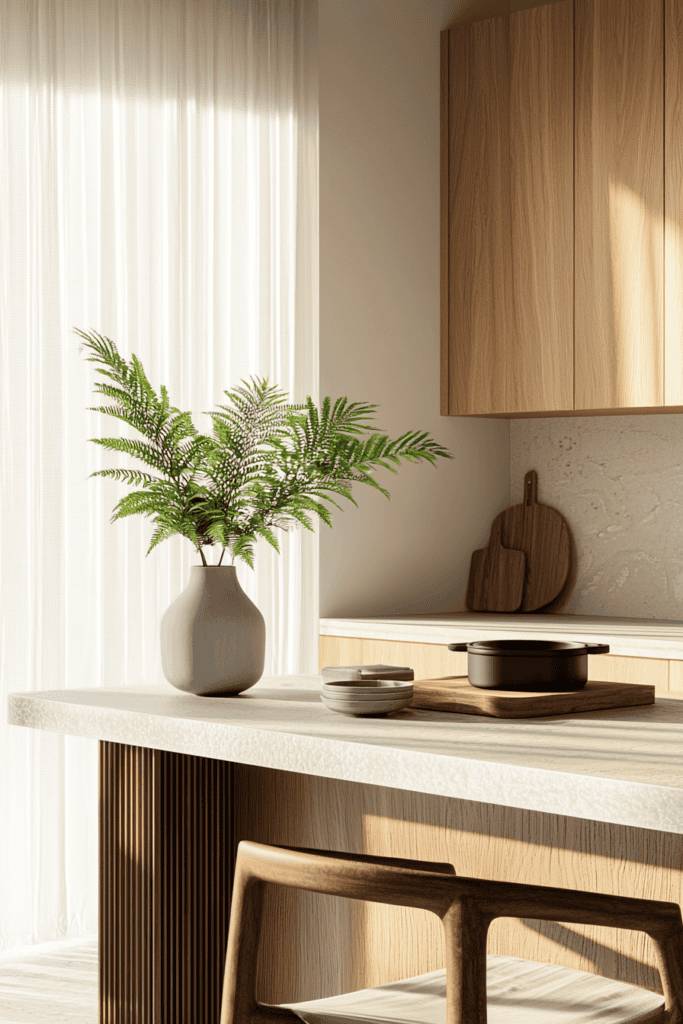
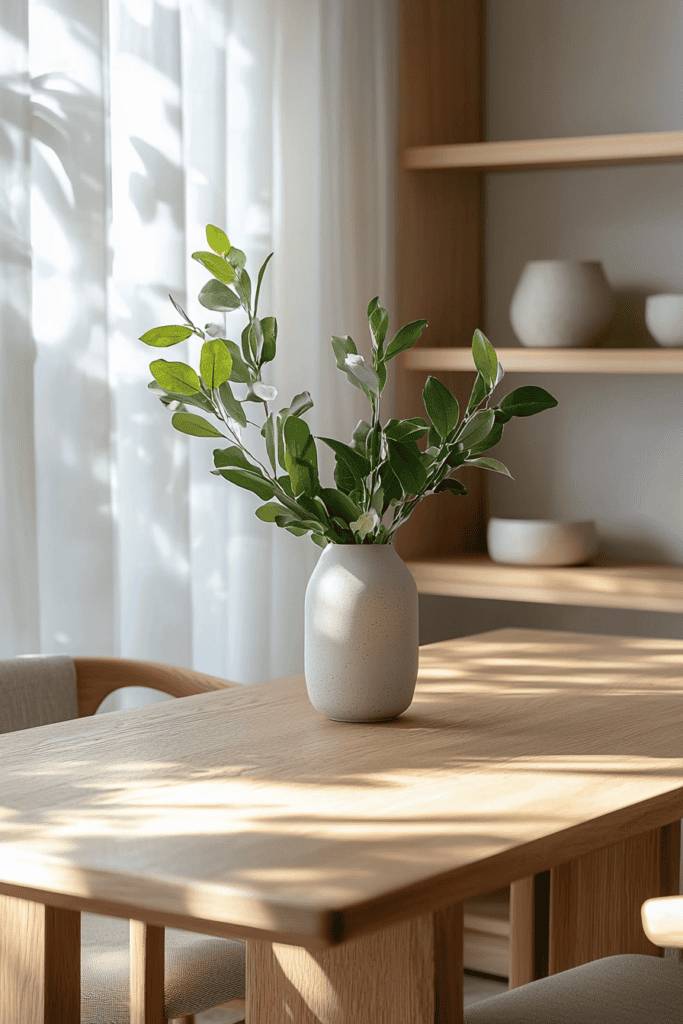
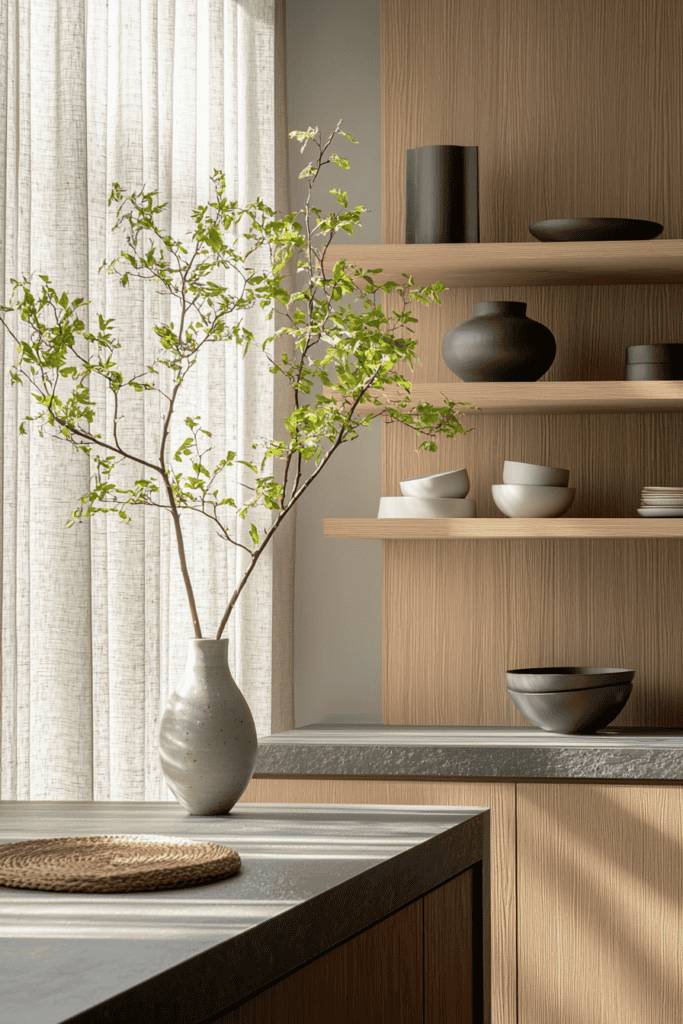
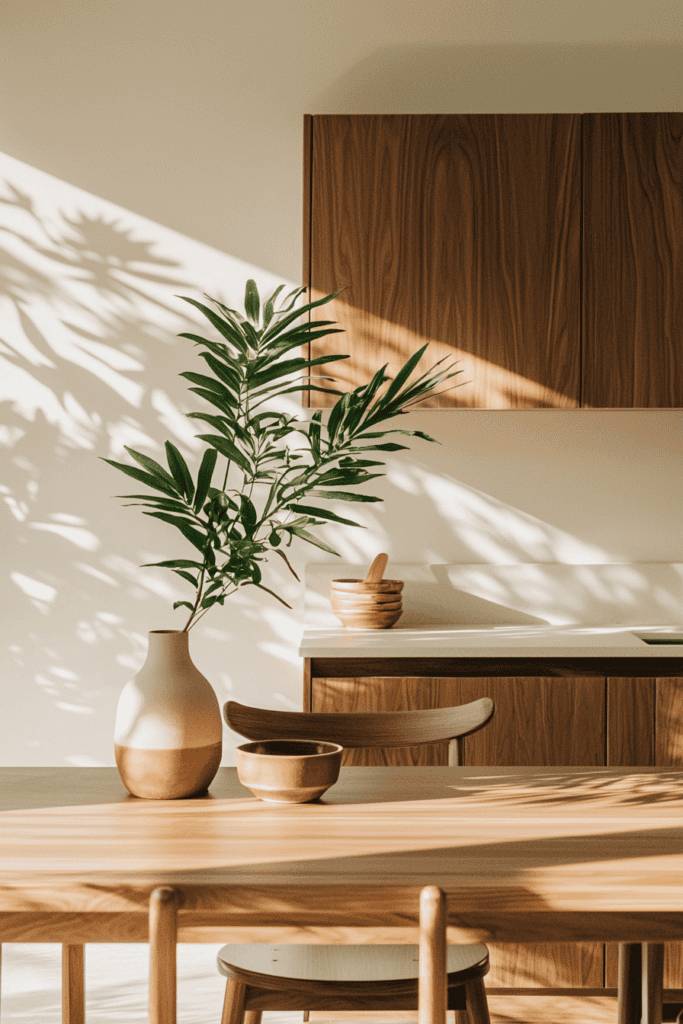
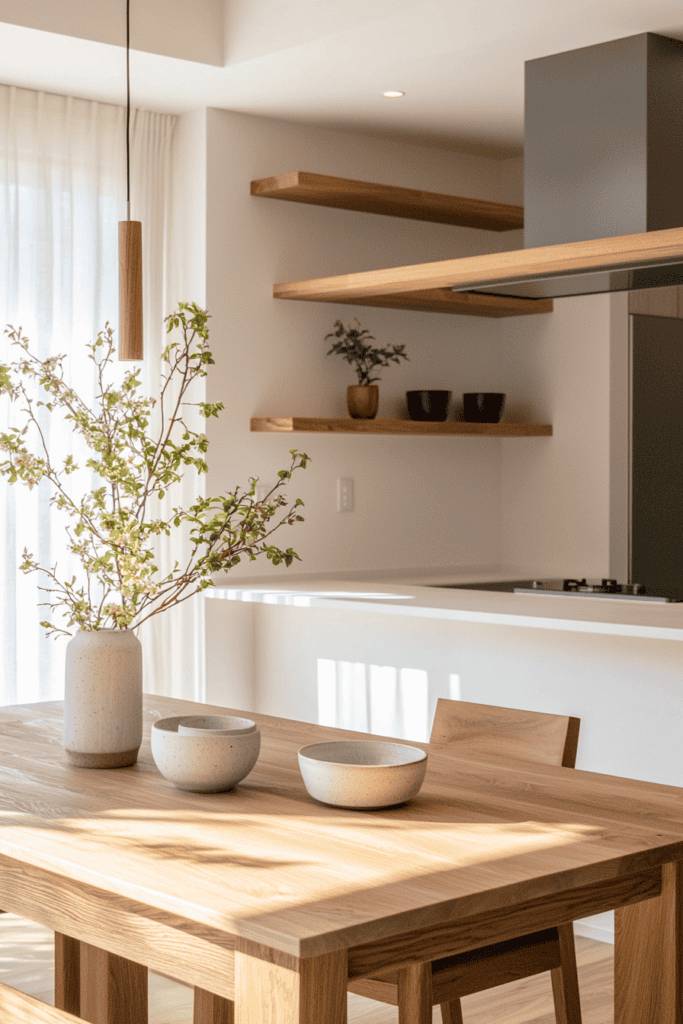
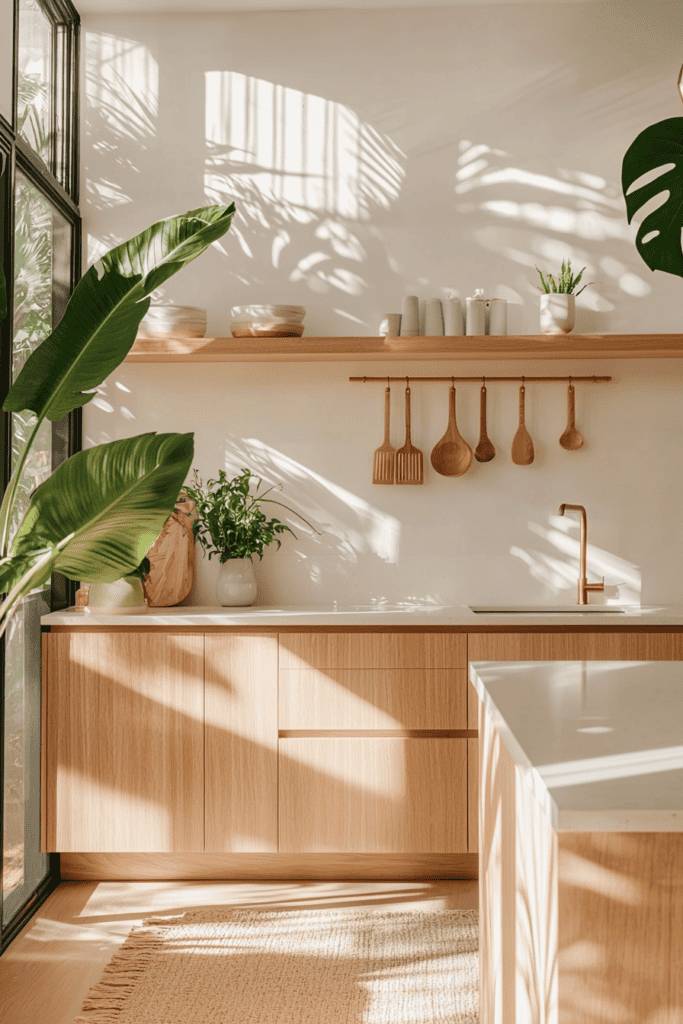
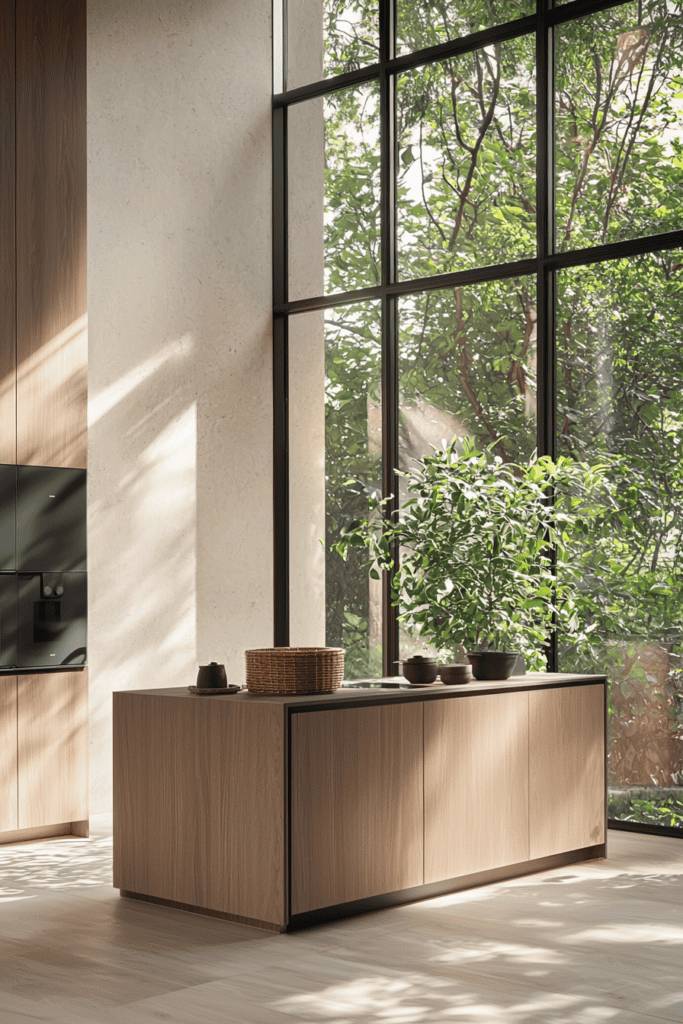
Embrace the serene harmony of a Japandi living room with large windows that invite natural light, showcasing a neutral color palette of soft beiges and warm grays. Opt for minimalist furniture that promotes a clutter-free space, while incorporating earthy textures and rich wood accents to enhance coziness. Don’t forget indoor plants and decorative ceramics for that personal touch. Imagine your perfect zen corner, and explore how you can transform your space into a peaceful sanctuary.
1.Embracing Natural Light With Large Windows
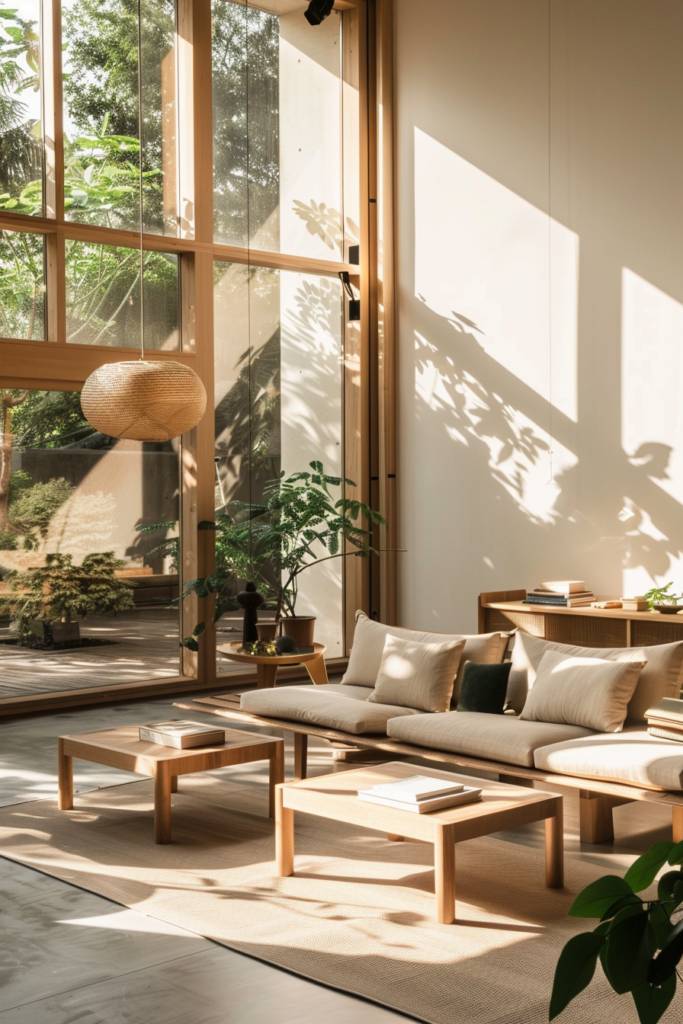
While you may be drawn to the minimalism of Japandi design, it’s the natural light that truly elevates a living room into a serene sanctuary. Large windows act as gateways, inviting the warm embrace of sunlight to dance across your space. Imagine pulling back sheer curtains, allowing streams of light to illuminate the soft textures and earthy tones that define Japandi style.
This abundance of light not only enhances your mood but also connects you to the tranquil outdoors, blurring the lines between inside and outside. The gentle shadows formed by sunlight create an ever-changing canvas, adding depth and warmth to your living room.
Consider how the light plays on natural materials—wood, stone, and textiles—creating an inviting atmosphere that feels both cozy and expansive. By embracing natural light through large windows, you transform your living space into a peaceful retreat that nurtures both mind and spirit.
2.Minimalist Furniture for a Clutter-Free Space

Natural light sets the stage for a serene atmosphere, but the furniture you choose plays an essential role in maintaining that sense of calm. Opt for sleek, minimalist pieces that emphasize function over form. Think low-profile sofas with neutral fabrics, which invite relaxation without overwhelming the space. A simple wooden coffee table can serve as a focal point while keeping the area open and airy.
Incorporate modular shelving that allows for easy organization; this way, you can display only the essentials, showcasing your personal style without cluttering your living room. Choose accent chairs that blend seamlessly with the overall aesthetic, focusing on clean lines and subtle colors.
3.Incorporating Earthy Textures With Wood Accents
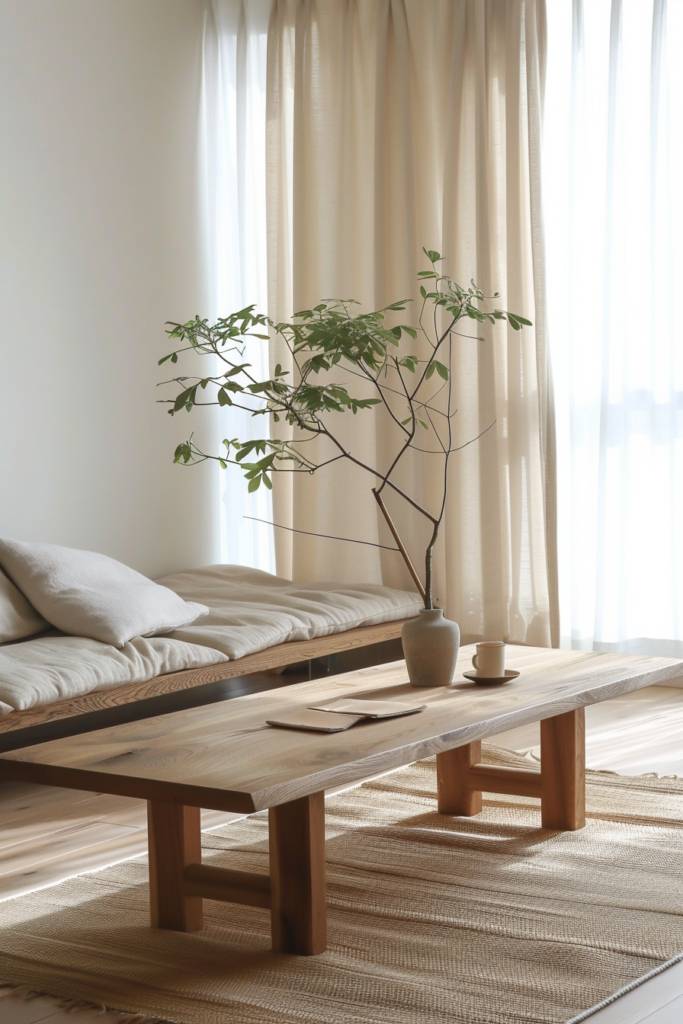
To create a warm and inviting atmosphere in your Japandi living room, incorporating earthy textures with wood accents is essential. Start by selecting natural materials like woven rattan, soft linen, or jute for your furnishings and accessories. These textures add depth and comfort, inviting relaxation. Pair these with warm wood elements, such as a sleek coffee table or minimalist shelving, to ground the space.
Consider mixing different wood finishes—light oak, rich walnut, or distressed driftwood—to create visual interest. Layering textures is key; think a plush area rug underfoot, alongside smooth wooden surfaces. To enhance the earthy vibe, add plants or natural stones, which bring the outdoors in and soften the overall look.
4.The Power of Neutral Color Palettes
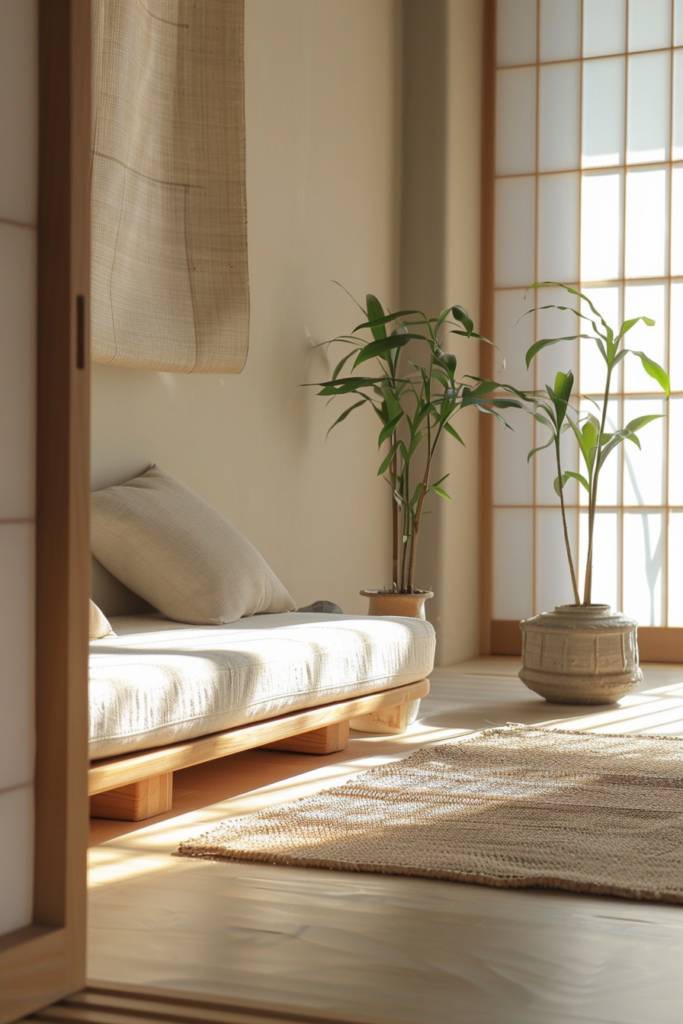
Embracing a neutral color palette can transform your Japandi living room into a serene retreat, where simplicity reigns supreme. By choosing soft beiges, warm grays, and muted whites, you create an inviting atmosphere that encourages relaxation. These colors work harmoniously, allowing natural light to bounce around the space, enhancing its openness.
Using neutrals not only fosters tranquility but also serves as a perfect backdrop for your carefully selected decor. Picture a minimalist sofa adorned with textured cushions in subtle shades, complemented by a light wooden coffee table. This combination highlights the beauty of the materials while maintaining a calm aesthetic.
Additionally, a neutral palette offers versatility, allowing you to easily switch up your accessories or artwork without clashing. It’s a canvas that adapts to your evolving taste, ensuring your living room remains a peaceful sanctuary, reflecting your style while promoting a sense of balance and harmony.
5.Creating a Zen Corner With Indoor Plants
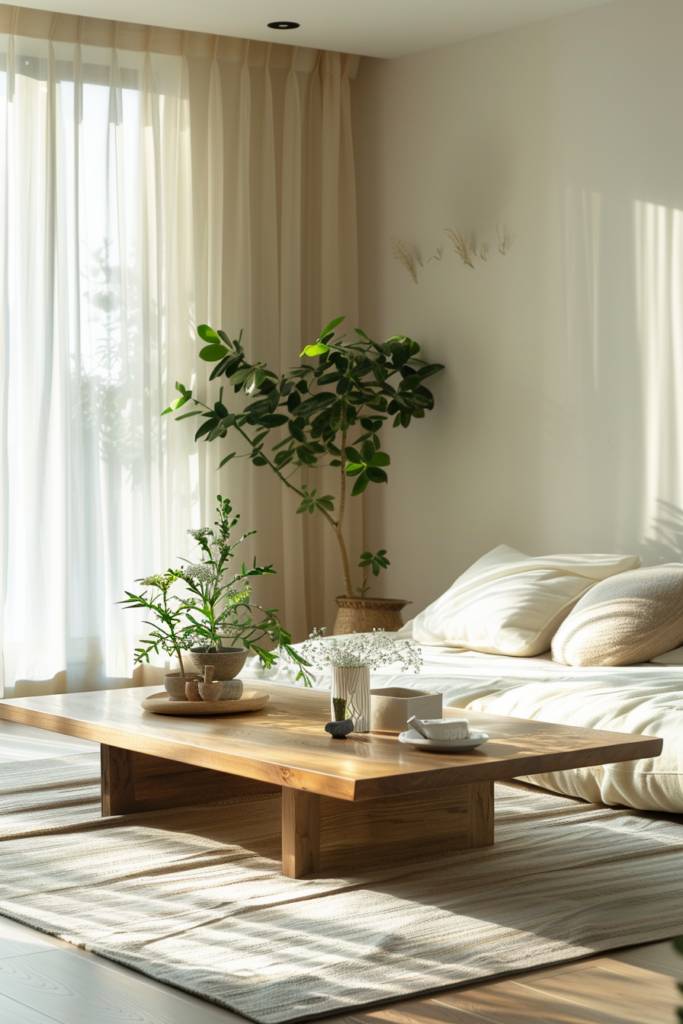
Incorporating indoor plants into your Japandi living room not only enhances the neutral palette but also brings a sense of tranquility and life into the space. Imagine a cozy corner adorned with a tall fiddle leaf fig or a delicate peace lily, their vibrant greens contrasting beautifully against warm wood tones. You could use minimalist ceramic pots that echo the simplicity of Japandi design, allowing the plants to be the focal points without overwhelming the aesthetic.
Position your plants near natural light, perhaps on a sleek side table or a low shelf. This not only nourishes them but creates a serene atmosphere where you can unwind. Consider adding a small water feature or a smooth stone to amplify the Zen vibe. By curating this corner, you’re not just adding decor; you’re crafting a peaceful retreat that invites mindfulness and reflection, enhancing your overall living experience.
6.Using Japanese Shoji Screens for Privacy
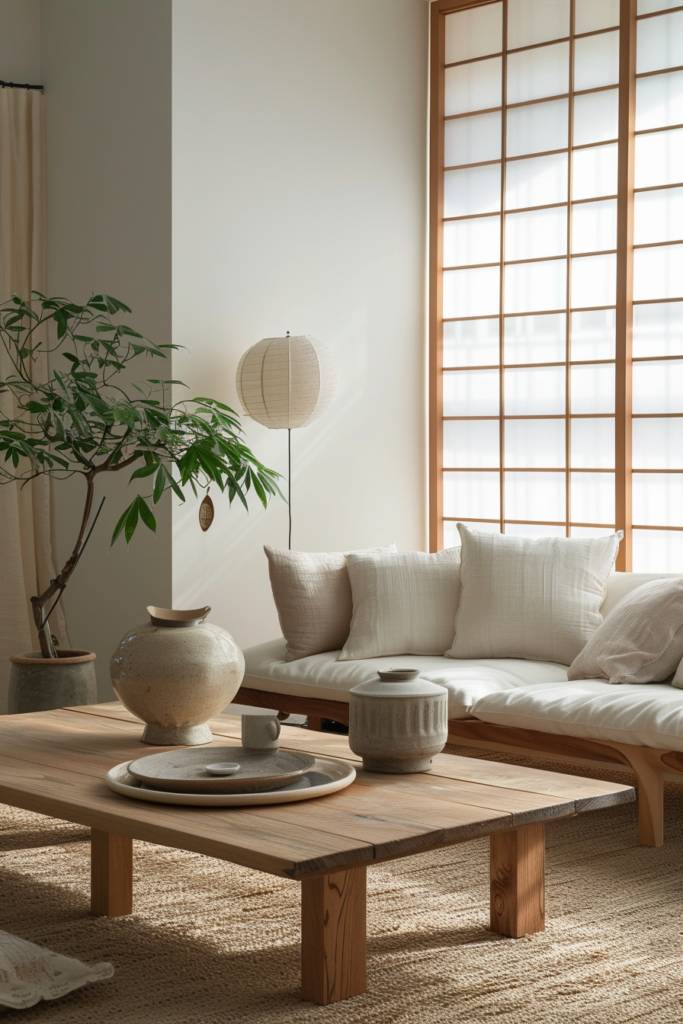
While you might seek an open and airy feel in your Japandi living room, using Japanese shoji screens can provide a perfect balance of privacy and elegance. These beautifully crafted screens, with their delicate wooden frames and translucent paper panels, effortlessly divide spaces while maintaining a sense of lightness. You can place them strategically to create intimate areas for reading or relaxation without sacrificing your room’s overall aesthetic.
Imagine how a shoji screen can transform your living room; it adds a layer of sophistication while allowing natural light to filter through. When closed, these screens offer a serene retreat, perfect for meditation or quiet moments. Plus, they complement the minimalist ethos of Japandi design by enhancing simplicity and functionality. Embrace the tranquility that shoji screens bring, and enjoy the balance of privacy and openness in your living space, fostering a truly harmonious environment.
7.Blending Traditional and Modern Elements
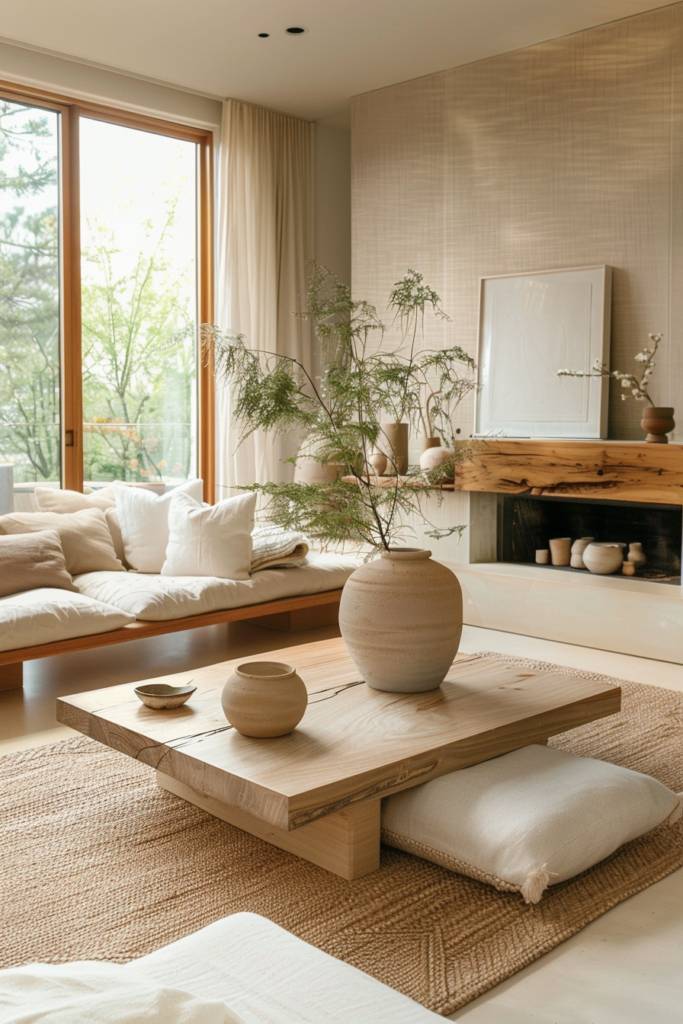
The beauty of a Japandi living room lies in its ability to harmonize traditional Japanese design with contemporary Scandinavian aesthetics. Imagine a space where minimalist furniture meets warm wood tones, creating an inviting atmosphere. You can incorporate low-profile, sleek sofas alongside handcrafted wooden tables that showcase intricate joinery, reflecting the craftsmanship of both cultures.
Think about integrating shoji screens that filter light without obstructing views, offering a seamless blend of privacy and openness. Accent your room with earthy color palettes—soft beiges, muted greens, and deep browns—that evoke a sense of calmness.
8.Cozy Throws and Pillows for Comfort
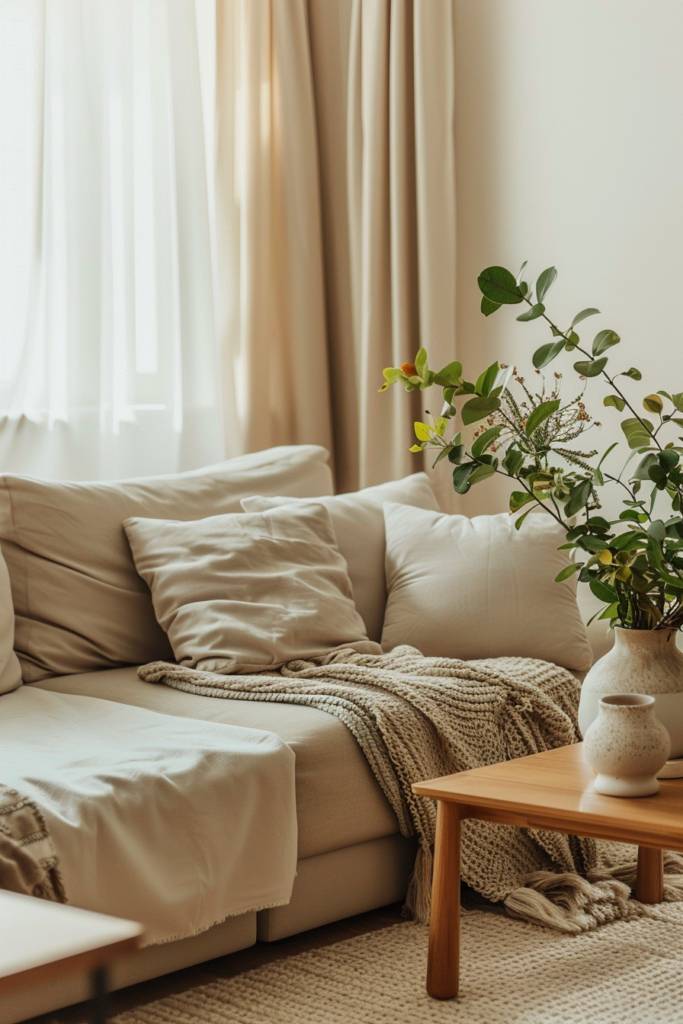
To create a truly inviting Japandi living room, cozy throws and pillows can make all the difference. These soft accents not only enhance comfort but also add warmth and personality to your space. Choose natural fabrics like linen, cotton, or wool in muted tones, as they blend seamlessly with the Japandi aesthetic. A chunky knit throw draped over the arm of your sofa invites you to snuggle up with a book, while plush pillows create an inviting atmosphere.
Layering different textures can elevate the design, so mix smooth and coarse fabrics for visual interest. Don’t shy away from subtle patterns—think gentle stripes or organic shapes that echo nature. Remember, the goal is to evoke a sense of serenity and simplicity, fostering a tranquil retreat where you can unwind. With the right throws and pillows, your living room will not only look beautiful but feel like a cozy haven.
9.Statement Pieces: A Japanese Tea Table
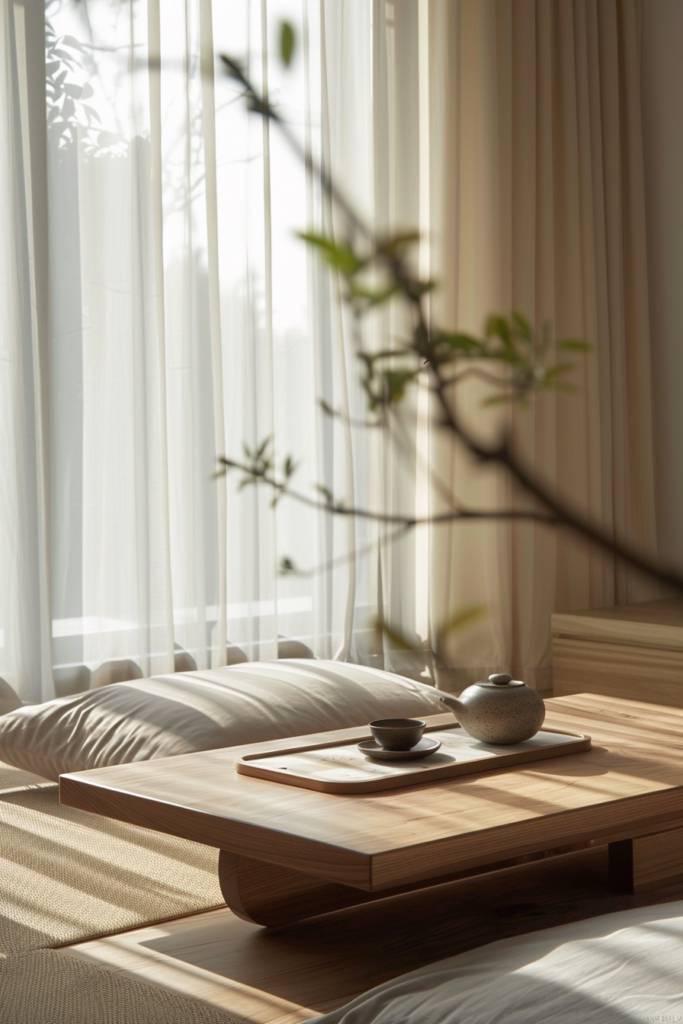
A Japanese tea table serves as a stunning focal point in a Japandi living room, embodying the elegance and simplicity of both Japanese and Scandinavian design. These low-profile tables, often crafted from natural wood, invite a sense of tranquility and togetherness. Their minimalist style encourages mindfulness, making them perfect for sipping tea or enjoying quiet moments.
You can choose a table with a rich, dark finish to add warmth, or go for a lighter wood to create a more airy feel. Pair it with simple, yet beautiful, ceramic tea sets to enhance the aesthetic. Consider the surrounding decor too; low seating, like floor cushions or poufs, complements the tea table beautifully while maintaining that grounded atmosphere.
10.Open Shelving for Functional Display
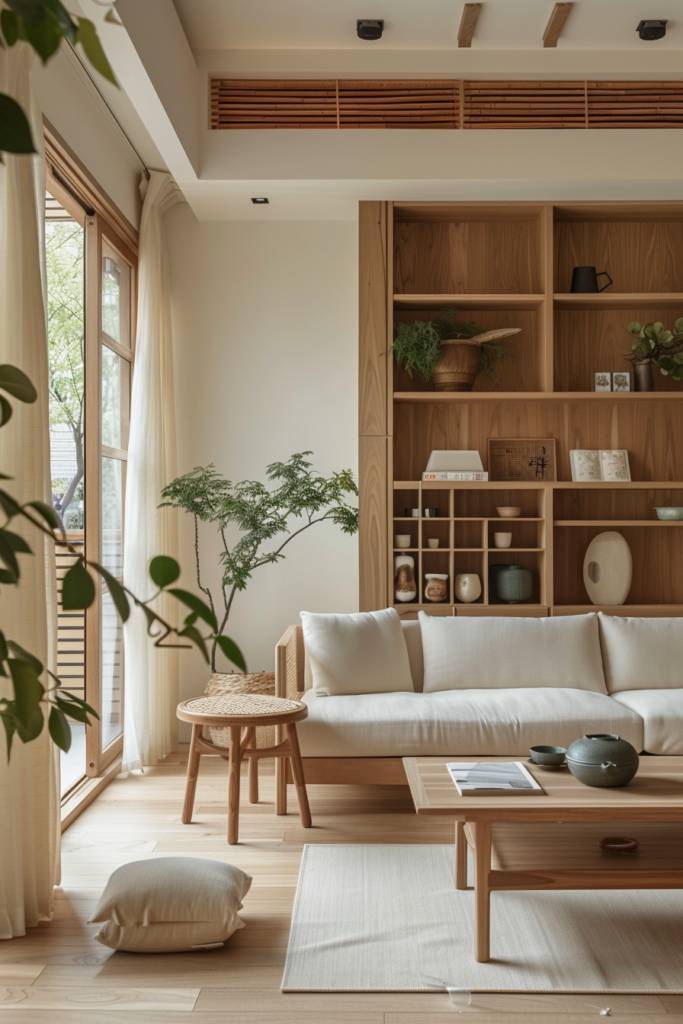
While embracing the Japandi aesthetic, open shelving offers a perfect blend of functionality and beauty in your living room. This design choice not only showcases your favorite items but also maintains that serene, uncluttered feel characteristic of Japandi style. Think about using natural materials like wood or bamboo for your shelves; they bring warmth and texture to the space.
You can curate a collection of minimalist decor, such as handcrafted pottery or simple books, ensuring each piece has purpose and meaning. Arrange items by height and color for visual interest, allowing negative space to breathe and create balance.
Incorporating plants can further enhance this display, adding a touch of nature that aligns with the Japandi philosophy. Open shelving invites you to express your personality while keeping things organized, making it a functional yet stylish solution for your living room.
11.Layering Rugs for Warmth and Style
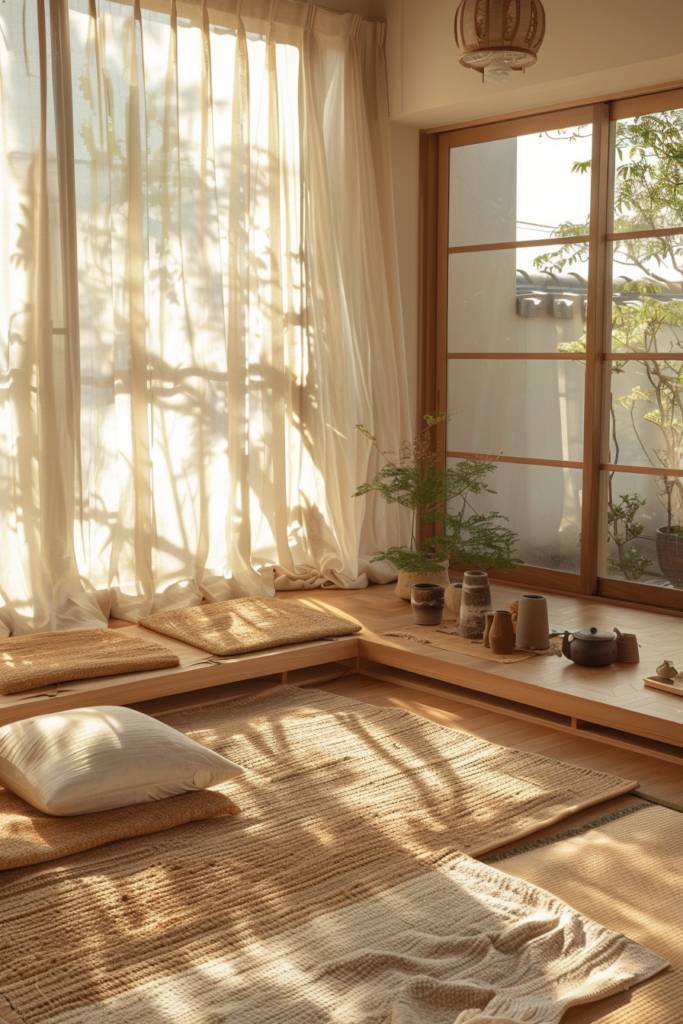
Layering rugs can transform your living room into a cozy haven, especially when you want to add depth and warmth to the Japandi aesthetic. Start with a larger, neutral base rug to anchor the space. This provides a serene backdrop that complements the minimalist vibe. Next, choose a smaller, textured rug to layer on top—something with natural fibers or subtle patterns to introduce visual interest without overwhelming the senses.
Consider color coordination; muted tones work best to maintain harmony. This layering creates a sense of comfort, inviting you to sink into the space. It also allows for playful experimentation with textures—try a soft wool rug paired with a flat-weave jute one.
As you walk barefoot across these layers, you’ll appreciate the warmth and style they bring, enhancing the overall tranquility of your Japandi-inspired living room. Embrace this easy yet impactful design element!
12.A Focal Point With a Scandinavian Fireplace
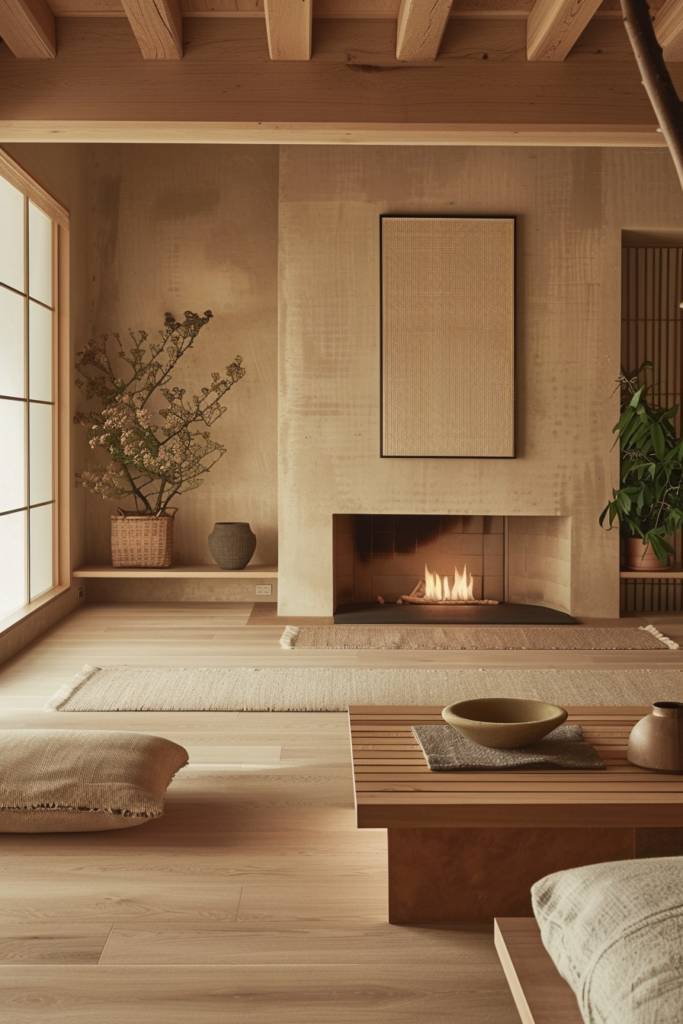
Incorporating a Scandinavian fireplace into your living room instantly creates an enchanting focal point that embodies the essence of Japandi design. These fireplaces, often characterized by clean lines and minimalistic forms, exude a sense of warmth and tranquility. Imagine gathering around a sleek, modern hearth, where the soft glow of flames dances against natural materials like wood and stone.
This design element doesn’t just serve a practical purpose; it enhances your space’s aesthetic by blending functionality with simplicity. Positioning the fireplace strategically—perhaps opposite your seating area—invites conversation and creates an inviting atmosphere. Surround it with muted colors and organic textures to maintain harmony with the Japandi style, which champions balance and serenity.
13.Subtle Artwork to Enhance Tranquility
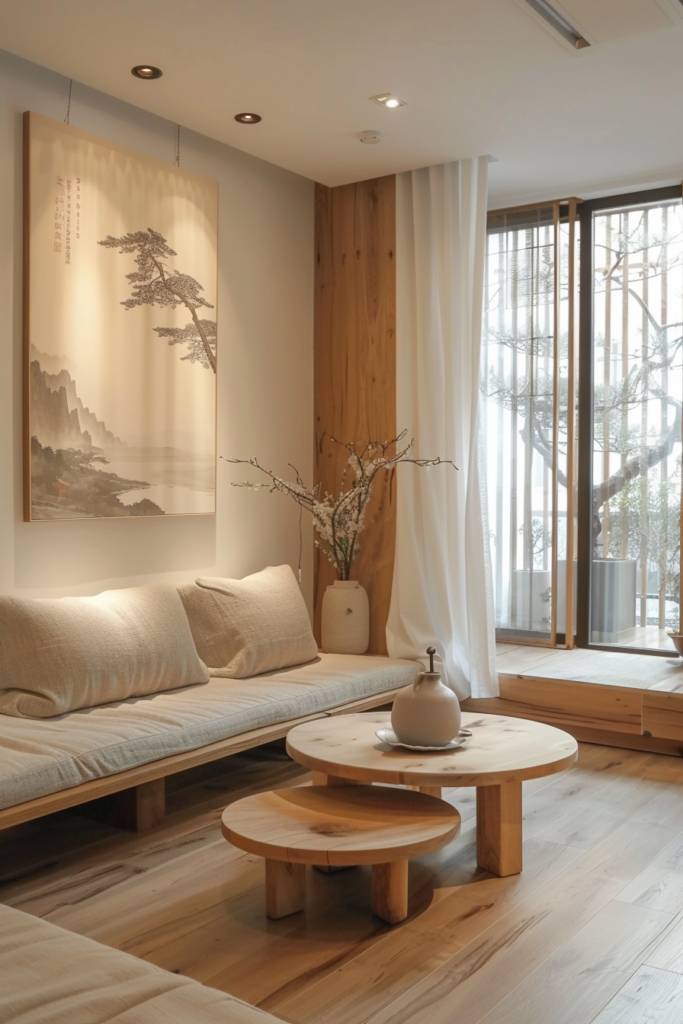
To create a serene ambiance in your Japandi living room, choosing subtle artwork can make all the difference. Opt for pieces that evoke calmness, like soft landscapes or minimalist abstracts. Gentle hues, such as muted greens or soft earth tones, can seamlessly blend with your neutral palette, enhancing the overall tranquility of the space.
Consider incorporating textures, such as a delicate watercolor or a simple line drawing, to add depth without overwhelming the senses. The idea is to evoke a sense of peace and connection to nature, which is fundamental in Japandi design.
Hang your artwork at eye level to draw attention without distraction, creating a soothing focal point. You might even want to group smaller pieces together, forming a harmonious gallery wall that invites contemplation. Ultimately, subtle artwork not only beautifies your living room but also nurtures a balanced, serene atmosphere.
14.Curated Bookshelves for a Personal Touch
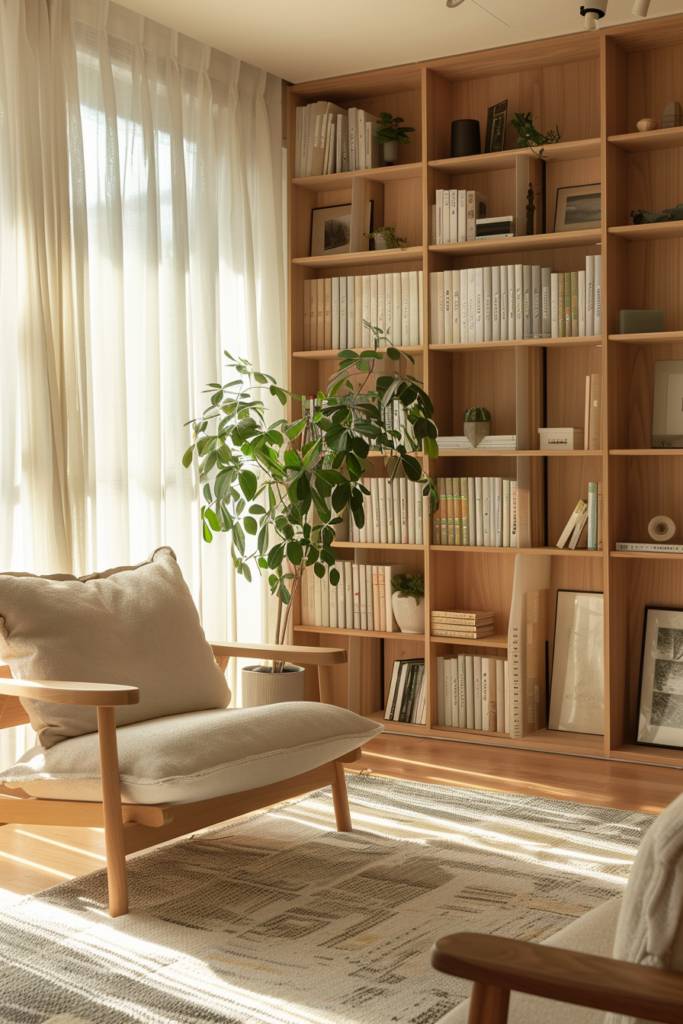
A well-curated bookshelf can serve as a stunning focal point in your Japandi living room, blending functionality with personal expression. To achieve this, start by selecting books that resonate with you—perhaps a mix of beloved classics, inspiring design books, or travel narratives that spark joy. Arrange them not just by color or size, but by the stories they tell, creating a visual narrative that invites exploration.
Incorporate decorative objects that reflect your personality, like handcrafted sculptures or plants for a touch of nature. Use minimalist bookends to maintain balance and guarantee the shelves don’t feel cluttered. Remember, negative space is just as important; it allows the eye to rest and enhances the overall aesthetic.
Finally, consider adding a few personal mementos or photographs, as they’ll infuse warmth and authenticity into your curated collection, making your space feel truly yours.
15.Incorporating Natural Stone Features
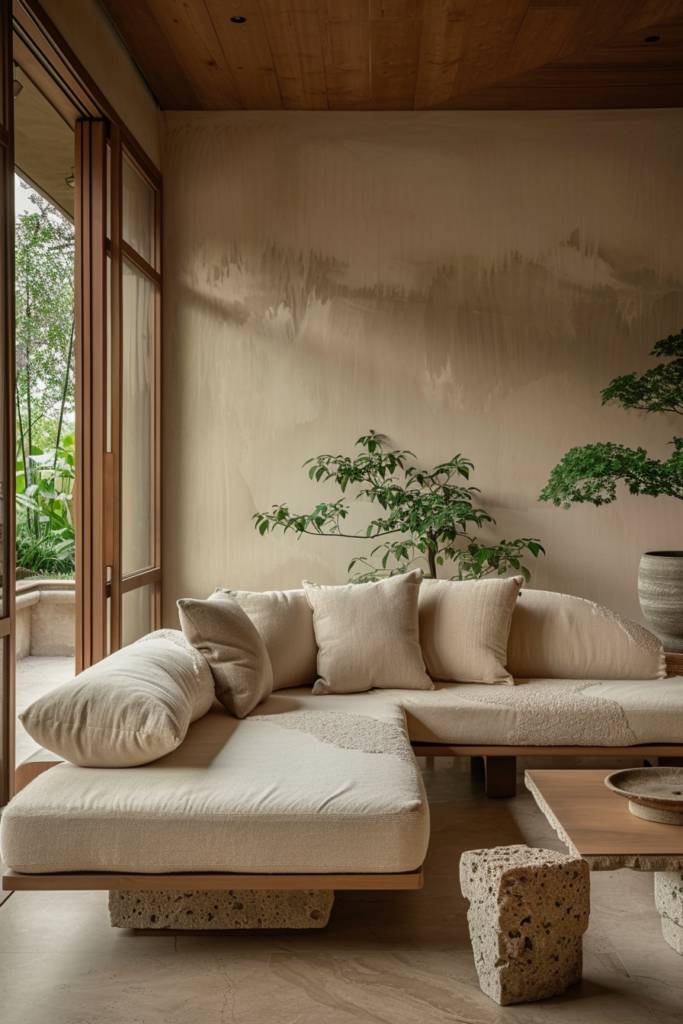
While you may not immediately think of stone as a key element in a Japandi living room, integrating natural stone features can greatly enhance the space’s tranquility and elegance. Imagine a sleek limestone coffee table or a polished granite feature wall that draws the eye without overwhelming the senses. These elements bring a sense of groundedness, connecting you to nature and promoting a calming atmosphere.
You can also consider using stone accents in decorative pieces, like a handcrafted vase or a simple sculpture. These accents add texture and interest, harmonizing beautifully with the minimalist ethos of Japandi design. When you choose softer, neutral tones, the stone complements the warm woods and soft fabrics typically found in such spaces.
Incorporating natural stones doesn’t just elevate aesthetics; it creates a serene backdrop for relaxation and mindfulness, making your living room a true sanctuary.
16.Soft Lighting With Paper Lanterns
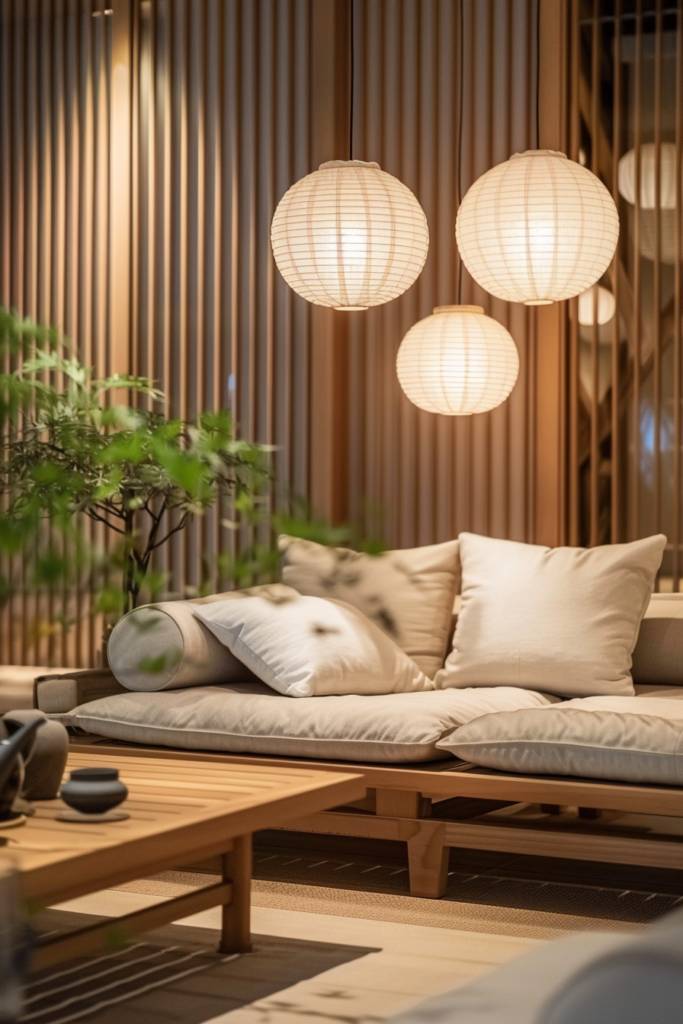
Natural stone features set a soothing tone in your Japandi living room, but soft lighting can elevate that ambiance even further. Consider incorporating paper lanterns, which blend seamlessly into this aesthetic while adding warmth and charm. Their gentle glow creates a serene atmosphere, perfect for unwinding after a long day.
Hang them at varying heights to add visual interest without overwhelming the space. You might choose muted tones that echo the earthy palette of your room, enhancing the natural elements present. As the lanterns diffuse light softly, they can highlight textures in your furnishings, like a cozy linen sofa or a rustic wooden coffee table.
Position them strategically around the room—perhaps near a reading nook or above a tranquil seating arrangement—to invite relaxation. With paper lanterns, you’ll not only illuminate your space but also cultivate a peaceful, inviting environment that embodies the essence of Japandi design.
17.Balancing Symmetry and Asymmetry
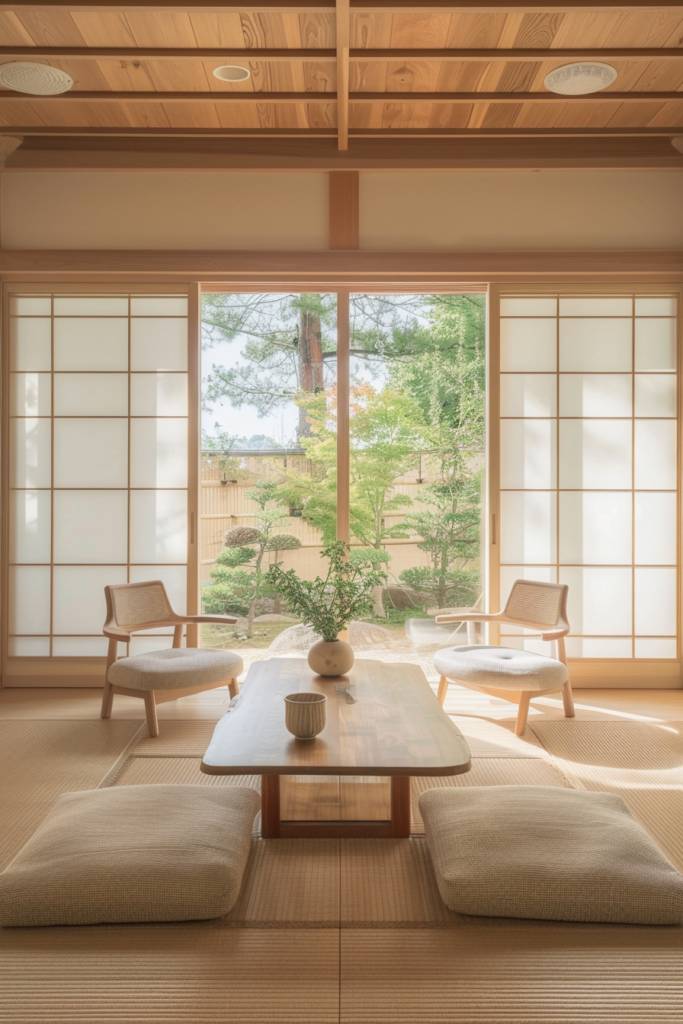
Incorporating both symmetry and asymmetry into your Japandi living room creates a harmonious yet dynamic space. You can achieve this balance by thoughtfully arranging furniture and decor. For instance, place a sleek, low-profile sofa centrally to establish symmetry, then introduce an asymmetrical element, like an art piece or decorative shelf, off to one side.
Consider pairing identical side tables with a quirky lamp or a uniquely shaped vase. This combination invites visual interest while maintaining a sense of order.
Incorporate color and texture mindfully; a neutral color palette can enhance symmetry, while varied materials like wood, metal, and textiles add an organic touch.
18.Multi-functional Furniture for Small Spaces
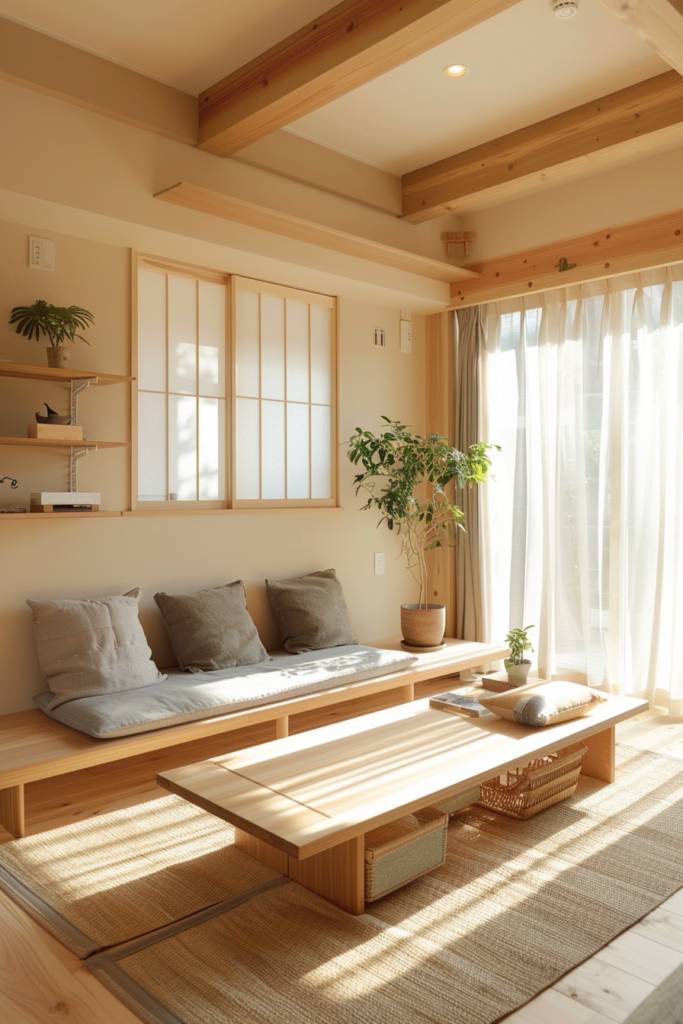
When you’re working with a small living room, choosing multi-functional furniture can transform the space into a practical yet stylish sanctuary. Think about a sleek coffee table that doubles as extra storage, where you can tuck away blankets or books. A sofa bed is another great option; it provides comfortable seating during the day and converts into a cozy sleeping area at night.
Consider nesting tables as well, which can be arranged together for a larger surface or separated to create more walking space. You might even explore ottomans that open up for hidden storage, adding both function and flair.
These choices not only save space but also enhance the overall aesthetic, embodying the Japandi ethos of minimalism and functionality. By thoughtfully integrating multi-functional furniture, you can maintain a serene environment while ensuring your living room meets all your needs.
19.Using Color Accents Sparingly
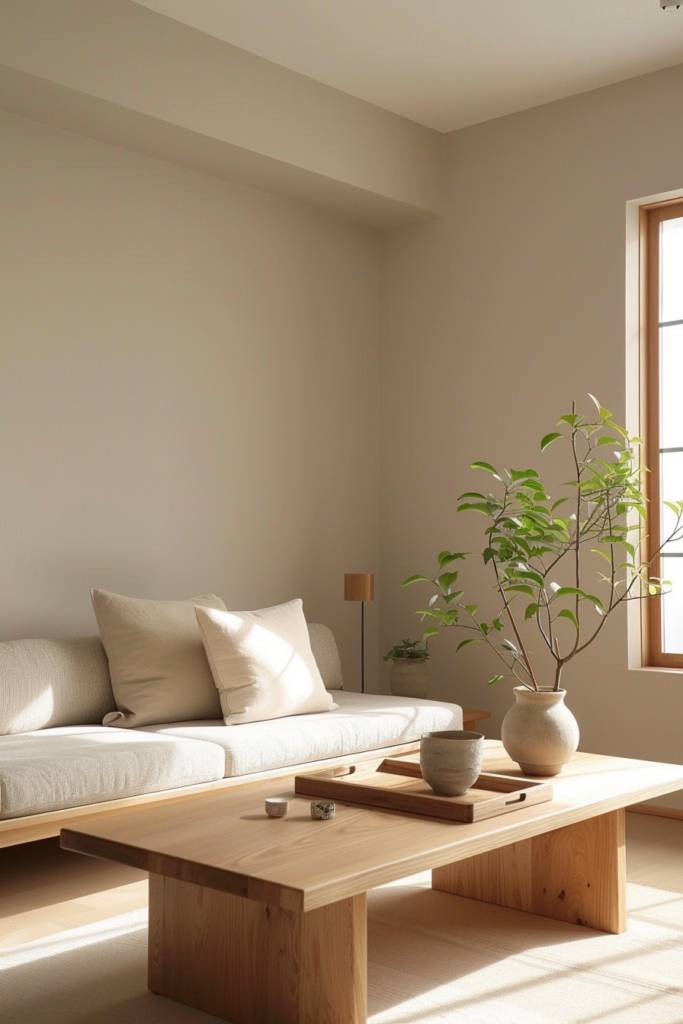
Although it might be tempting to fill your living room with bold colors, using color accents sparingly can create a more harmonious atmosphere that aligns with the Japandi aesthetic. Instead of overwhelming your space, choose a few intentional pops of color that draw the eye without competing for attention.
Consider soft, muted hues—think dusty pinks or sage greens—that complement your neutral base. A throw pillow or a piece of art in these shades can add warmth and personality without disrupting the serene vibe.
Balance is key. Pair your color accents with natural materials and textures, like wood and linen, to enhance that tranquil feel. By selecting just a few thoughtfully placed accents, you’ll create a cohesive look that invites calmness and balance into your living room. This approach not only highlights your decor but also reflects the essence of Japandi living: simplicity, functionality, and understated beauty.
20.Rustic Wood Beams for Architectural Interest
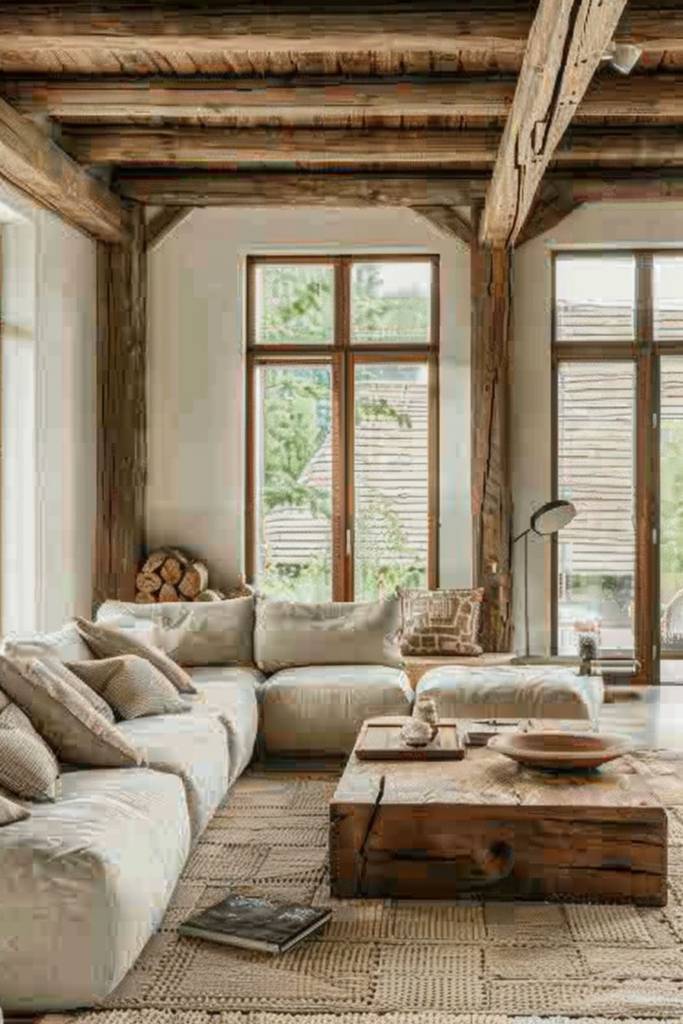
Rustic wood beams can transform your living room into a cozy retreat, adding both warmth and architectural interest. These beams create a stunning visual contrast against smooth walls and minimalist furnishings typical of Japandi design. Imagine the rich textures and natural imperfections of the wood bringing an organic touch to your space.
When strategically placed, they can draw the eye upward, enhancing the sense of height and openness in your room. You can also play with different finishes—whether you prefer a weathered look or a polished sheen, each choice will evoke a unique ambiance. Pairing these beams with soft textiles and muted colors emphasizes the tranquility that Japandi living rooms embody.
Incorporating rustic wood beams not only anchors your design but also invites a sense of timelessness, connecting you to nature and enhancing your overall comfort. It’s a simple yet effective way to enrich your living space.
21.The Importance of Negative Space
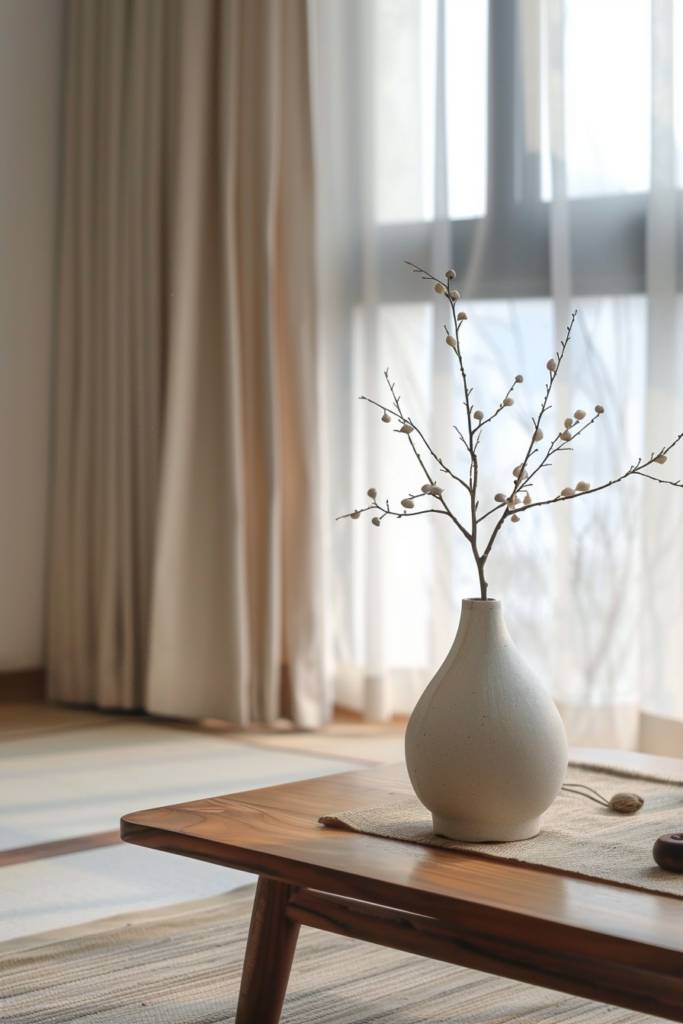
While embracing the essence of Japandi design, understanding the importance of negative space can greatly enhance your living room’s aesthetic. Negative space refers to the areas around and between objects; it’s just as significant as the items you choose to display. By intentionally allowing open spaces, you foster a sense of tranquility and balance, inviting the eye to rest and the mind to breathe.
In a Japandi-inspired room, think of how a single, well-placed piece of furniture or art can stand out against a backdrop of emptiness. This approach encourages mindfulness, drawing attention to the beauty of simplicity. Too many items can create visual clutter, disrupting the serene atmosphere you aim for. Instead, embrace spaciousness to highlight your carefully selected decor, allowing each element to resonate harmoniously. Ultimately, negative space isn’t just an absence; it’s a powerful design tool that transforms your living room into a peaceful retreat.
22.Decorative Ceramic and Pottery Accents
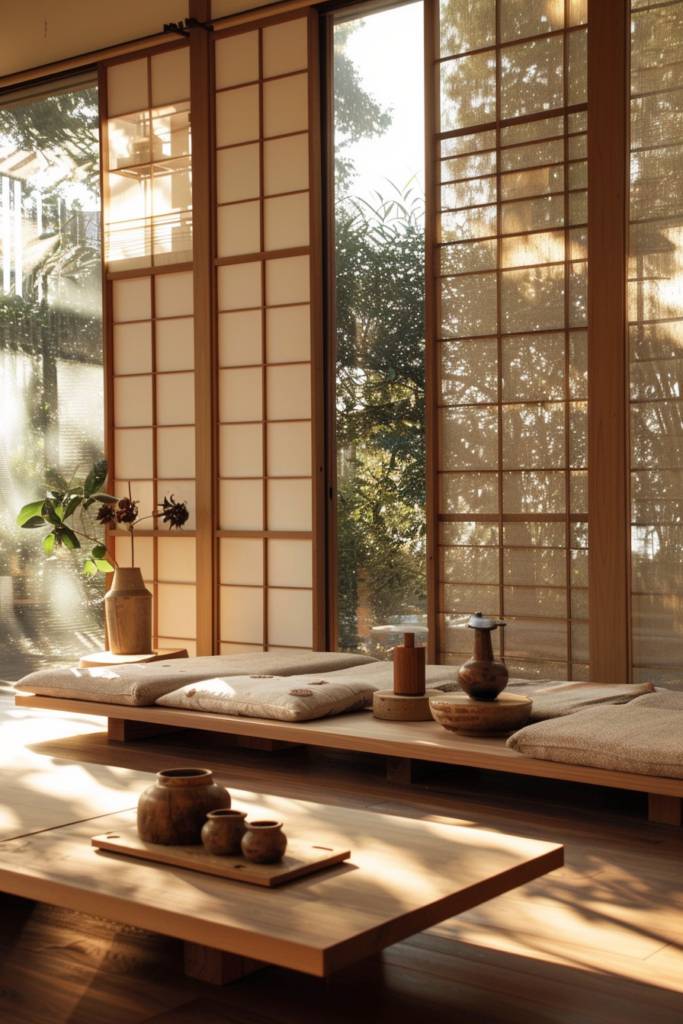
In a Japandi living room, decorative ceramics and pottery can serve as stunning focal points that enhance the overall aesthetic without overwhelming the senses. Think of a handcrafted vase, its organic shape and muted colors drawing the eye while complementing your space’s serene vibe. You might choose a few minimalist pieces, like a textured bowl or a delicate teapot, to add layers of interest without cluttering.
Consider incorporating different heights and textures to create visual harmony. A tall, slender vase might stand gracefully beside a low, earthy pot, inviting conversation and curiosity. The beauty of these accents lies in their simplicity; they embody the Japandi philosophy of marrying functionality with elegance. As you curate these pieces, remember that each one tells a story, contributing to the peaceful balance that defines your Japandi living room. Let your ceramics and pottery reflect your personal style while remaining true to this aesthetic.
23.Creating a Cozy Reading Nook
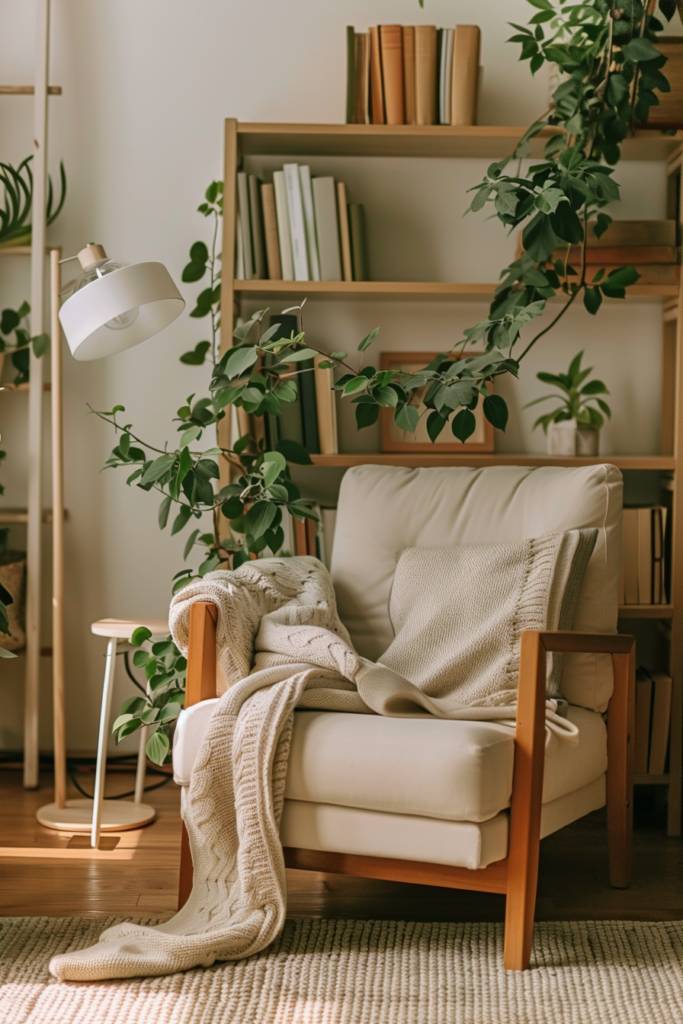
How can you transform a corner of your living room into a cozy reading nook? Start by selecting a comfortable chair that invites you to sink in and lose track of time. A plush armchair or a floor cushion works wonders. Next, drape a soft throw over the chair for added warmth and texture. Position a small side table nearby to hold your favorite books and a steaming cup of tea.
Lighting plays an essential role, so consider a stylish floor lamp or a wall-mounted sconce that provides soft, ambient light. Surround your nook with elements that evoke tranquility—think minimalist decor, warm wood tones, and natural materials. You might also add a small bookshelf or floating shelves to keep your literary treasures close at hand. Finally, don’t forget some greenery; a small plant can breathe life into your space, enhancing that serene Japandi vibe you’re aiming for.
24.Integrating Outdoor Elements With Biophilic Design
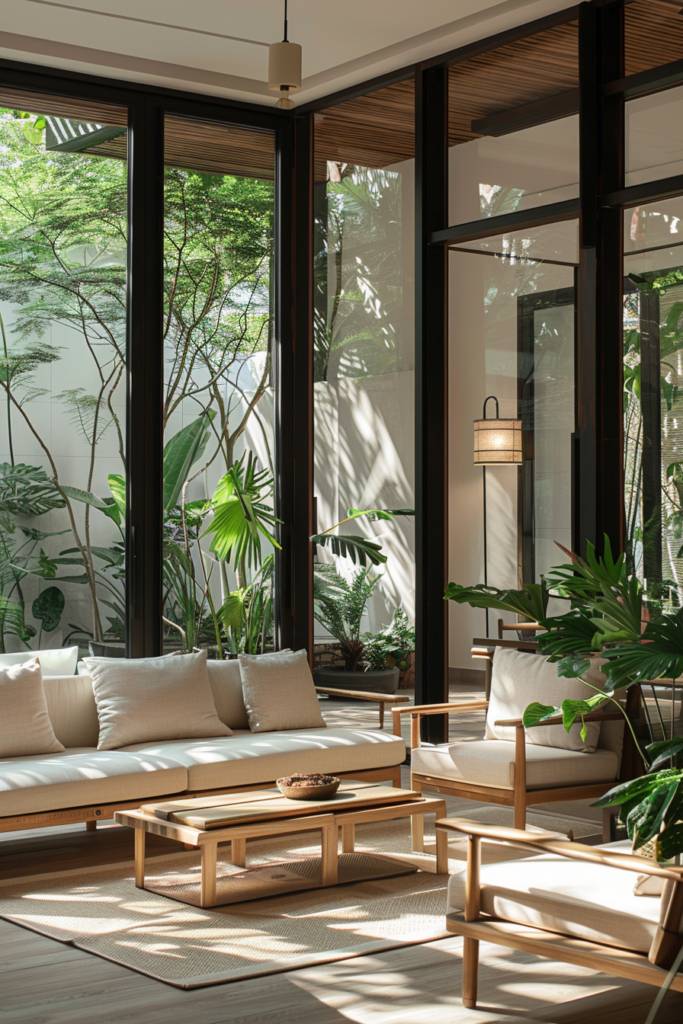
Bringing the outdoors inside can transform your living room into a serene retreat that feels connected to nature. Start by incorporating plants, allowing greenery to breathe life into your space. Choose low-maintenance varieties like snake plants or pothos, which thrive indoors and enhance air quality.
Next, consider using natural materials. Wood, stone, and woven textures evoke a sense of calm and add warmth. A wooden coffee table or a jute rug can harmoniously blend with your Japandi aesthetic.
Maximize natural light by opting for sheer curtains, letting sunlight filter through and create a soft, inviting glow.
You might also want to integrate outdoor views by strategically placing furniture to face windows, drawing your eyes toward nature outside.
With these elements, you’ll cultivate a living room that not only reflects your style but also nurtures a deeper connection to the world around you, fostering tranquility and balance.
25.A Calm Atmosphere With Soundproofing Solutions
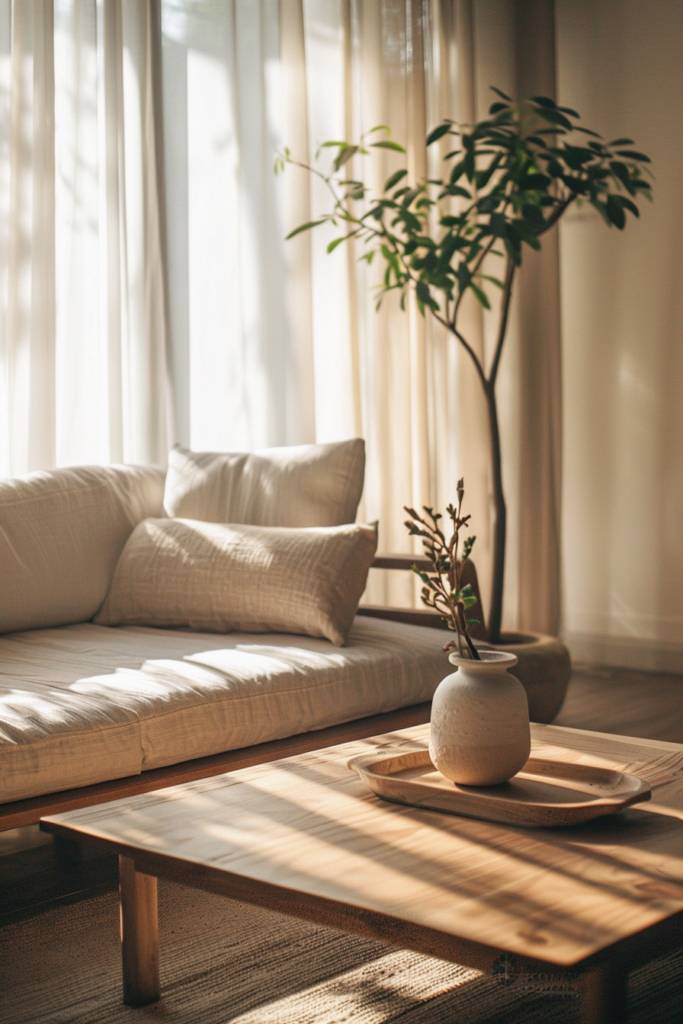
While you may love the idea of a serene Japandi living room, achieving a truly calm atmosphere often hinges on effective soundproofing solutions. Begin by evaluating your space; hard surfaces can amplify noise. Consider adding plush rugs to absorb sound and create a warmer feel. Soft furnishings like upholstered sofas and cushions not only enhance comfort but also minimize echoes.
Window treatments such as heavy drapes or soundproof blinds can further reduce outside noise, inviting tranquility into your sanctuary. You might also explore acoustic panels, which can be stylishly integrated into your decor.
Finally, plants play a dual role—adding beauty while also helping to absorb sound. By implementing these soundproofing solutions, you’ll cultivate a Japandi living room that not only reflects minimalist elegance but also promotes a peaceful, undisturbed environment, perfect for relaxation and mindfulness.
Conclusion
Incorporating these Japandi living room ideas can transform your space into a serene sanctuary. By blending natural light, minimalist furniture, and earthy textures, you’ll create a harmonious balance that invites tranquility. Don’t forget the power of plants and neutral palettes to enhance the calming atmosphere. With thoughtful accents and cozy nooks, your living room will not only reflect your style but also promote peace and relaxation, making it the perfect retreat from the hustle and bustle of daily life.